







What's Happening?
Brent crude prices fell following a ceasefire agreement between Israel and Hezbollah, easing concerns about disruptions to Middle East oil supplies. The ceasefire, which began at 4 p.m. local time, was confirmed by a senior U.S. official. Brent crude futures
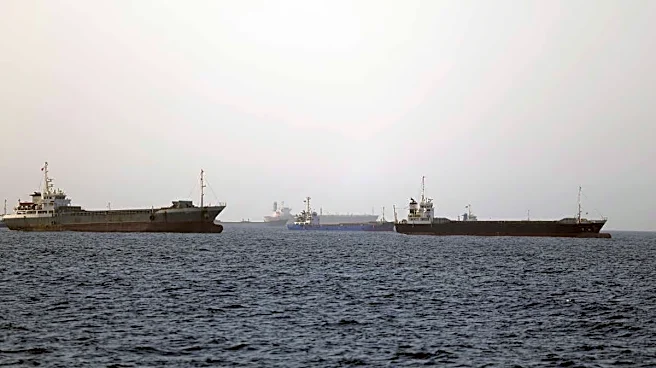
dropped by 1.1% to $79 a barrel, marking a weekly decline of 9.5%. Similarly, U.S. West Texas Intermediate crude saw a decrease, with the front-month July contract falling by 0.8% to $75.96 a barrel. The ceasefire comes after an interim deal between the U.S. and Iran, which is expected to release over 85 million barrels of oil stranded in the Middle East Gulf into global markets. This agreement also includes the lifting of U.S. sanctions on Iranian oil, potentially increasing supply. Analysts predict that oil markets may move into surplus, with prices trending lower over the next six to 12 months.
Why It's Important?
The ceasefire and subsequent drop in oil prices have significant implications for global energy markets. The easing of tensions in the Middle East could stabilize oil supplies, which are crucial for global economic stability. The lifting of U.S. sanctions on Iranian oil is particularly impactful, as it could lead to increased oil supply and potentially lower prices. This development is beneficial for oil-importing countries, as it may reduce energy costs. However, oil-exporting nations might face challenges due to potential revenue losses from lower prices. The situation also highlights the geopolitical complexities of the region, where energy resources are often intertwined with political conflicts.
What's Next?
The future of oil prices will depend on the stability of the ceasefire and the implementation of the U.S.-Iran agreement. If the ceasefire holds, it could lead to a more stable oil market. However, any resurgence of conflict could disrupt supplies and drive prices up again. Additionally, the global oil market will be watching the recovery of oil flows through the Strait of Hormuz, a critical chokepoint for global oil transportation. The response of major oil-producing countries, particularly those in OPEC, will also be crucial in determining future oil prices and market stability.