



What's Happening?
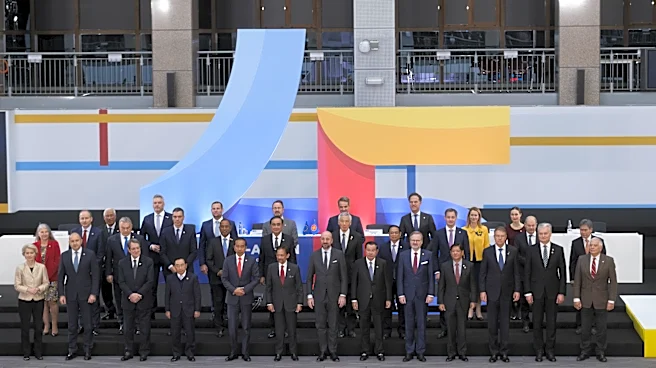
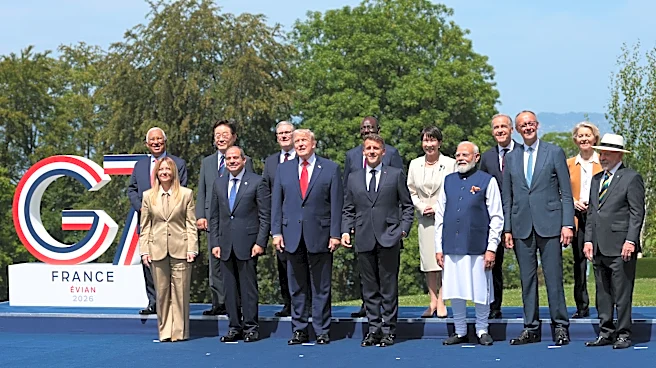
The Group of Seven (G7) leaders convened at the 2026 Évian Summit in France, where they established a non-binding G7 Critical Minerals Resilience and Production Alliance. This initiative aims to reduce the collective dependence of G7 members on a single
supplier outside the G7 and partner countries for rare earths and permanent magnets. The stated objective is to lower this dependence to below 60% by 2030, with an ambition to reach 50% as soon as possible. The alliance builds upon the Critical Minerals Production Alliance developed under Canada's 2025 presidency, extending cooperation across extraction, processing, financing, stockpiling, and recycling. The summit, held from June 15 to 17, addressed a broad agenda including economic stability, international security, critical-mineral supply chains, development partnerships, public health, and transnational challenges. The G7, an informal forum of seven major industrialized democracies (Canada, France, Germany, Italy, Japan, the United Kingdom, and the United States) with the European Union also participating, coordinates political positions and government policies on global issues. Unlike formal international organizations, the G7 lacks a founding treaty, permanent secretariat, or independent authority to adopt legally binding decisions.
Why It's Important?
This development is significant for the U.S. and other G7 nations as it directly addresses vulnerabilities in critical mineral supply chains, which are essential for advanced technologies and energy systems. Reducing reliance on a single supplier, particularly from outside the G7, enhances national security and economic resilience by mitigating risks associated with geopolitical tensions, trade disruptions, and monopolistic control over vital resources. The non-binding nature of the alliance means that its effectiveness will depend on the subsequent investment decisions, industrial capacity development, commercial arrangements, and specific measures adopted by individual governments. For U.S. industries, this could lead to increased domestic production, diversification of sourcing, and greater investment in mining, processing, and recycling technologies for rare earths and permanent magnets. It also signals a concerted effort among leading economies to secure strategic materials, potentially influencing global market dynamics and fostering new partnerships in the critical minerals sector. The initiative underscores a broader shift towards de-risking supply chains and strengthening economic sovereignty among allied nations.
What's Next?
Following the establishment of the G7 Critical Minerals Resilience and Production Alliance, the next steps will involve individual G7 member states, including the U.S., translating these political commitments into concrete actions. This will likely include the development of national strategies, policies, and incentives to support the diversification of critical mineral supply chains. Governments may pursue increased funding for domestic exploration, extraction, and processing projects, as well as investments in recycling infrastructure. Bilateral and multilateral agreements with partner countries outside the G7 could also be explored to secure alternative sources. Industry stakeholders will be watching for specific policy announcements, grants, and regulatory changes that could impact investment decisions and operational strategies. The success of the alliance will hinge on the sustained political will of participating governments and their ability to coordinate efforts effectively to achieve the stated targets of reducing single-supplier dependence by 2030 and beyond. Regular assessments and reporting on progress towards these goals are also anticipated.
Beyond the Headlines
The formation of the G7 Critical Minerals Resilience and Production Alliance highlights a deeper geopolitical and economic reorientation among major industrialized democracies. Beyond immediate supply chain concerns, this initiative reflects a strategic imperative to counter the influence of nations that currently dominate critical mineral production and processing. It raises questions about the long-term implications for global trade relationships, the potential for new economic blocs centered on resource security, and the acceleration of technological innovation in materials science. Ethically, the push for diversified sourcing could lead to increased scrutiny of environmental and labor practices in new mining regions, potentially elevating standards globally. Legally, while the alliance is non-binding, it sets a precedent for coordinated action that could influence future international agreements and trade policies. Culturally, it underscores a growing awareness of the interconnectedness of national security, economic prosperity, and access to essential raw materials, shaping public discourse around resource independence and strategic autonomy.