



What's Happening?
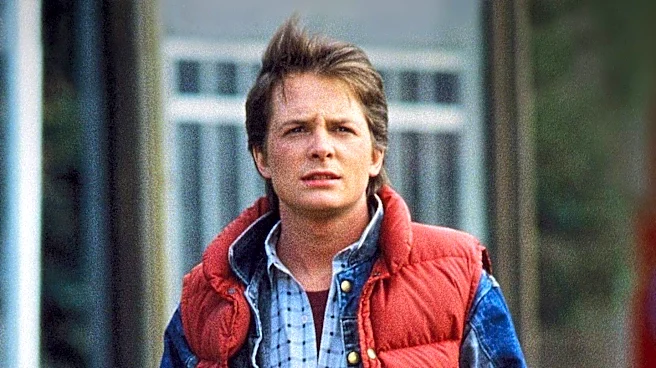
The 'Back to the Future' trilogy, directed by Robert Zemeckis, remains a beloved classic in the science fiction genre. A key element of the first film is a photograph that protagonist Marty McFly carries, which serves as a visual cue for the audience
about the stakes of his time-traveling mission. As Marty interacts with the past, his siblings begin to disappear from the photograph, symbolizing the potential erasure of his family from existence. However, this plot device raises questions about the photograph's origin and the logic of its changes, as the entire image should theoretically vanish if the family never existed.
Why It's Important?
The enduring popularity of 'Back to the Future' highlights the film's impact on popular culture and its role in shaping the science fiction genre. The photograph serves as a narrative tool that effectively communicates the urgency of Marty's mission, but it also exemplifies the complexities and paradoxes inherent in time travel stories. This aspect of the film invites viewers to engage with the narrative on a deeper level, pondering the implications of time travel and the nature of existence. The film's ability to spark such discussions contributes to its status as a cultural touchstone.
Beyond the Headlines
The questions raised by the photograph in 'Back to the Future' reflect broader themes in science fiction, such as the nature of reality and the consequences of altering the past. These themes resonate with audiences because they challenge our understanding of time and causality. The film's playful yet thought-provoking approach to these concepts encourages viewers to consider the ethical and philosophical dimensions of time travel. As a result, 'Back to the Future' continues to inspire new generations of filmmakers and audiences, ensuring its place in the pantheon of great science fiction cinema.