
What's Happening?
A study conducted by the University of the Sunshine Coast and published in Maturitas has revealed that High-Intensity Interval Training (HIIT) is more effective than moderate-intensity exercise for adults
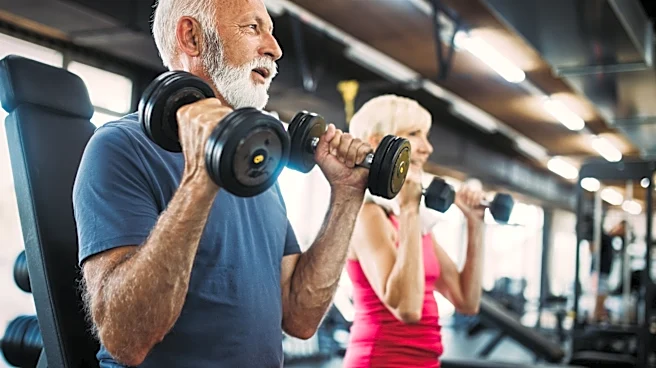
over 65 in preserving lean muscle mass while reducing body fat. The research involved 123 healthy adults, with an average age of 72, who participated in three supervised 45-minute exercise sessions per week for six months. Participants were divided into groups performing high-, moderate-, or low-intensity exercises. While all three intensities led to modest fat loss, only the HIIT group maintained lean muscle tissue. Moderate-intensity exercise also reduced fat but resulted in a slight decline in lean tissue. Lead author Grace Rose, PhD, an exercise physiologist, noted that HIIT's effectiveness stems from the increased stress it places on muscles, signaling the body to retain muscle tissue. The study also observed modest improvements in abdominal fat measurements.
Why It's Important?
This finding is significant for the aging population in the U.S. as maintaining muscle mass is crucial for mobility, independence, and overall quality of life as individuals age. The natural process of aging often leads to sarcopenia, the degenerative loss of skeletal muscle mass, quality, and strength. The study suggests that HIIT could be a valuable tool in mitigating this decline, offering a more effective strategy for older adults to manage body composition. Preserving lean mass can help prevent falls, improve functional abilities, and support metabolic health. The distinction between losing fat while preserving muscle is vital, as traditional weight loss often results in the loss of both fat and muscle, which can be detrimental to older adults' health and functional capacity.
What's Next?
For older adults interested in incorporating HIIT into their fitness routines, researchers advise a gradual approach to building fitness, selecting manageable intervals, and seeking medical guidance before starting vigorous exercise. The study emphasizes that supervised sessions, individualized exercise intensity, and planned recovery were integral to its success, suggesting that older adults should not attempt exhaustive workouts daily without proper guidance. Future research may focus on translating these findings into practical, accessible exercise programs for a broader older adult population, potentially leading to updated fitness recommendations for seniors. The findings could also influence the development of specialized fitness programs offered in community centers and healthcare settings aimed at promoting healthy aging.
Beyond the Headlines
While the study highlights the benefits of HIIT for older adults, it also comes with caveats. The improvements observed were relatively small and their clinical significance compared to lower-intensity exercise is not yet fully clear. Additionally, body-composition scans measured lean tissue rather than directly assessing muscle strength, meaning that preserving lean mass does not automatically equate to greater strength or improved daily function. This points to a broader discussion about the holistic aspects of fitness in older age, where strength, balance, and flexibility are equally important. The study underscores the need for personalized exercise prescriptions that consider individual health status, fitness levels, and goals, moving beyond a one-size-fits-all approach to exercise for seniors.