






What's Happening?
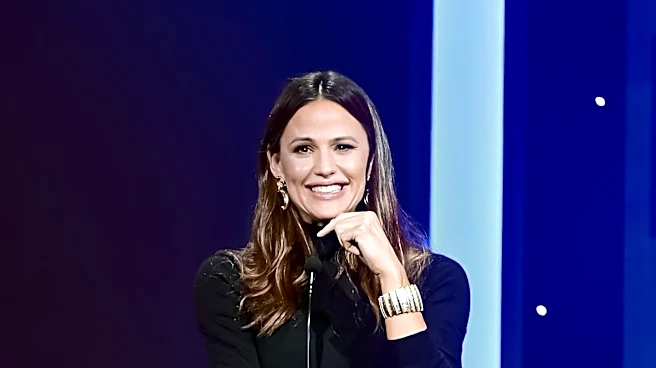
Jennifer Garner recently described her ex-husband, Ben Affleck, as a 'flexible' co-parent in an interview with 'Sunday Today with Willie Geist.' Garner, 54, highlighted that Affleck, also 54, has been instrumental in allowing her to balance her acting
career with her family life. She noted that the majority of her recent filming projects have been located in Los Angeles, which enables both parents to return home and spend time with their children. The former couple shares three children: Violet, 20, Seraphina, 17, and Samuel, 14. Garner expressed gratitude for this arrangement, emphasizing that it's not an easy feat to achieve such a balance. She also humorously mentioned that their children tend to stay up later than she does. This positive co-parenting dynamic has allowed Garner to pursue her professional endeavors while ensuring their children's well-being.
Why It's Important?
This story highlights the increasing importance of effective co-parenting strategies, particularly among high-profile individuals who face unique challenges in balancing demanding careers with family responsibilities. For many families, especially those with divorced parents, maintaining a harmonious co-parenting relationship is crucial for the children's stability and emotional well-being. Garner's public acknowledgment of Affleck's flexibility sets a positive example, demonstrating that even after divorce, parents can collaborate effectively for the benefit of their children. This dynamic can influence public perception of divorced families, promoting understanding and reducing stigma. It also underscores the value of mutual respect and cooperation in navigating complex family structures, offering a model for others facing similar situations in the U.S. and beyond.
What's Next?
The continued public discourse around Jennifer Garner and Ben Affleck's co-parenting relationship is likely to reinforce the importance of amicable post-divorce arrangements, especially for children's welfare. Their example may encourage other public figures and individuals to prioritize cooperative co-parenting, potentially leading to more open conversations about successful family dynamics after separation. This positive portrayal could also influence media narratives surrounding celebrity divorces, shifting focus from conflict to constructive solutions. As their children grow older, the sustained flexibility and mutual respect between Garner and Affleck will remain vital in supporting their development and maintaining a stable family environment, potentially inspiring broader societal discussions on modern family structures.
Beyond the Headlines
Beyond the immediate narrative of celebrity co-parenting, this situation touches upon broader societal shifts in family structures and gender roles. Jennifer Garner's ability to pursue her career while having a supportive co-parent like Ben Affleck reflects a changing landscape where both parents are increasingly expected to share childcare responsibilities. This dynamic challenges traditional gender norms, where mothers often bore the primary burden of childcare. The emphasis on 'flexibility' in co-parenting also highlights the evolving understanding of family units, moving beyond conventional nuclear models to embrace diverse arrangements that prioritize children's needs. This case subtly underscores the legal and social frameworks that support shared parental responsibilities, contributing to a cultural dialogue about equitable parenting and the long-term benefits of collaborative post-divorce relationships for children's psychological and social development.