



What's Happening?
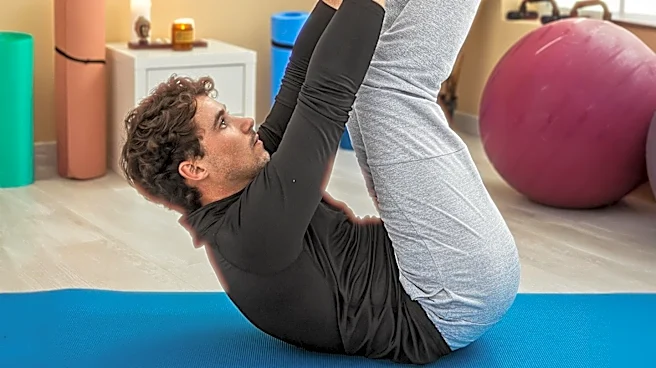
Fitness Volt has published an article detailing the 'dragon flag,' an advanced core exercise famously used by Bruce Lee. The move, which Lee included in his daily abdominal routines around 1970, involves lying on a bench, gripping behind the head, and
raising and lowering the entire body as a rigid plank, with only the shoulders touching the pad. The article outlines a five-step progression for mastering this challenging bodyweight exercise, starting with a reverse crunch on a bench and advancing to the full dragon flag. It emphasizes that the exercise works the abs, obliques, hip flexors, glutes, lats, shoulders, and arms by requiring the body to maintain a straight line against gravity, preventing the trunk from bending. The publication also advises on who should avoid the exercise, particularly individuals with lower back pain, neck, or shoulder problems, due to the significant load placed on these areas.
Why It's Important?
This detailed breakdown of the 'dragon flag' is important for the fitness community, offering insights into an advanced core strength technique. For athletes and fitness enthusiasts, understanding the mechanics and progression of such a demanding exercise can enhance training regimens and contribute to overall physical development. The emphasis on proper form and a gradual progression helps prevent injuries, which is crucial in high-intensity training. By highlighting the specific muscle groups engaged, the article provides valuable information for targeted strength building. Furthermore, connecting the exercise to a legendary figure like Bruce Lee adds historical context and inspiration, potentially motivating more individuals to explore advanced bodyweight training. The cautionary advice regarding pre-existing conditions underscores the importance of safe and informed exercise practices, promoting a healthier approach to fitness.
What's Next?
Individuals interested in advanced core training may begin incorporating the five-step progression of the 'dragon flag' into their routines, as suggested by Fitness Volt. Fitness coaches and personal trainers might use this information to guide their clients through the exercise safely and effectively. The article recommends training the progression two or three non-consecutive days a week, placing it at the start of a workout while fresh. It also suggests incorporating supporting moves like the hollow body hold and leg raises to complement the 'dragon flag' training. As more people attempt this exercise, there may be increased discussions within fitness communities about its effectiveness and variations. Further research into the specific muscle activation of the 'dragon flag' could also emerge, building upon the existing studies on long-lever core exercises mentioned in the article.
Beyond the Headlines
The resurgence of interest in exercises like the 'dragon flag' reflects a broader trend in fitness towards functional strength and bodyweight training, often inspired by historical figures or martial arts disciplines. This movement emphasizes mastering one's own body weight for strength and control, rather than solely relying on external weights. The 'dragon flag' exemplifies this philosophy, demanding significant core stability, muscular endurance, and full-body coordination. Its inclusion in Bruce Lee's routine highlights a holistic approach to physical conditioning that integrates strength, flexibility, and discipline. This trend also underscores the continuous evolution of fitness methodologies, where ancient practices and techniques are re-evaluated and integrated with modern understanding of biomechanics and injury prevention, offering diverse pathways for individuals to achieve peak physical condition.