
What's Happening?
John Shegerian, Chairman and CEO of ERI, the largest electronics recycler in the U.S., presented at the World Remanufacturing Summit in Tokyo, Japan. Shegerian discussed the current state of rare earth
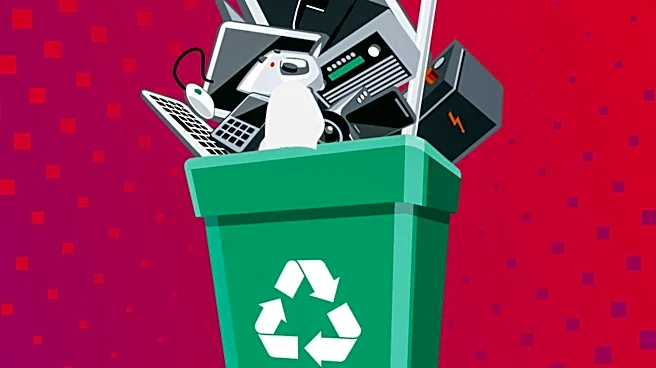
material recovery, emphasizing the potential of 'above-ground mines' created through the responsible recycling of electronic waste. He highlighted how innovation and collaboration are moving the quest for rare earth materials beyond traditional mining, unlocking value from end-of-life electronics, and accelerating the transition to a circular economy. The summit brought together leaders from industry, academia, and research to exchange ideas and strengthen collaboration on remanufacturing. Shegerian shared insights alongside experts from Toyota Motor Corporation, Panasonic Holdings, and Brother Industries.
Why It's Important?
The recovery of rare earth elements from electronic waste is crucial for several reasons. It reduces reliance on traditional mining, which can be environmentally intensive and often concentrated in geopolitically sensitive regions. By tapping into the 'above-ground mine' of discarded electronics, the U.S. can enhance its supply chain security for these critical minerals, which are essential for technologies ranging from smartphones to defense systems. This approach also promotes a circular economy, minimizing waste and maximizing resource utilization. ERI's leadership in this area demonstrates a viable pathway for sustainable resource management and contributes to the broader goal of reducing environmental impact while meeting the growing demand for rare earths.
What's Next?
The insights shared by John Shegerian at the World Remanufacturing Summit are expected to further stimulate interest and investment in electronic waste recycling technologies for rare earth recovery. Continued collaboration between industry, academia, and government will be essential to scale these efforts. ERI, with its capacity to process over a billion pounds of electronic waste annually across its eight certified U.S. locations, is poised to play a significant role in this expansion. Future developments will likely include advancements in separation technologies, increased public awareness about e-waste recycling, and policy initiatives supporting a circular economy model for critical minerals. The focus will remain on developing efficient and environmentally responsible methods to extract valuable materials from discarded electronics.
Beyond the Headlines
The concept of 'above-ground mining' through e-waste recycling represents a paradigm shift in resource acquisition, moving away from purely extractive practices towards a more sustainable, circular model. This approach not only addresses the scarcity of rare earth elements but also tackles the growing problem of electronic waste, which poses significant environmental and health challenges. The ethical and environmental implications of traditional mining, including habitat destruction and pollution, can be mitigated by prioritizing recycling. Furthermore, this shift could foster new industries and job creation in advanced recycling and materials science, positioning the U.S. as a leader in sustainable resource management and technological innovation.