



What's Happening?
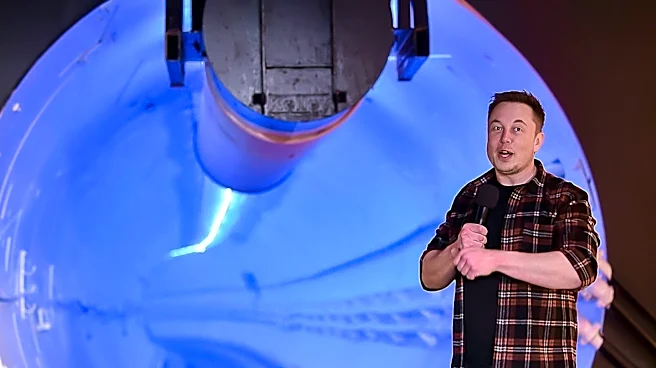
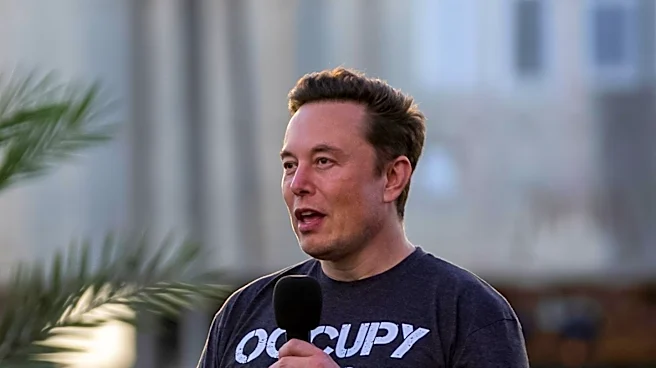
Elon Musk, now a trillionaire, is at the center of speculation regarding a potential merger between his companies, SpaceX and Tesla. Following SpaceX's recent public offering, investors are curious about the possibility of combining the two companies into
a $3 trillion entity. During a recent call with shareholders, Musk did not confirm any plans for a merger but acknowledged the increasing overlap between the companies. He highlighted potential synergies, such as integrating SpaceX's Starlink internet service with Tesla's robotaxis and collaborating on artificial intelligence projects. The merger could streamline operations and enhance efficiency, making the combined entity one of the largest in the world, comparable to Microsoft.
Why It's Important?
The potential merger between SpaceX and Tesla could have significant implications for the tech and automotive industries. By combining resources, the companies could accelerate advancements in AI and satellite technology, potentially giving them a competitive edge. The merger would also consolidate Musk's control over Tesla, aligning the strategic vision across both companies. However, such a move could face regulatory challenges, particularly in international markets like China, where Tesla has substantial operations. The merger could also impact shareholder dynamics, as Musk's influence would increase, potentially reducing external oversight.
What's Next?
While no immediate merger plans have been confirmed, the possibility remains a topic of interest among investors and analysts. Musk's history of merging companies suggests that a future combination of SpaceX and Tesla is plausible. Regulatory hurdles and market reactions will be critical factors in determining the feasibility of such a merger. Stakeholders will closely monitor any developments, especially regarding regulatory approvals and potential impacts on market competition.