




What's Happening?
Jelly lip oils are emerging as a popular beauty product, characterized by their ultra-moisturizing, non-sticky formulation that combines the benefits of lip oil and gloss. These products are designed to provide significant hydration, with some formulations
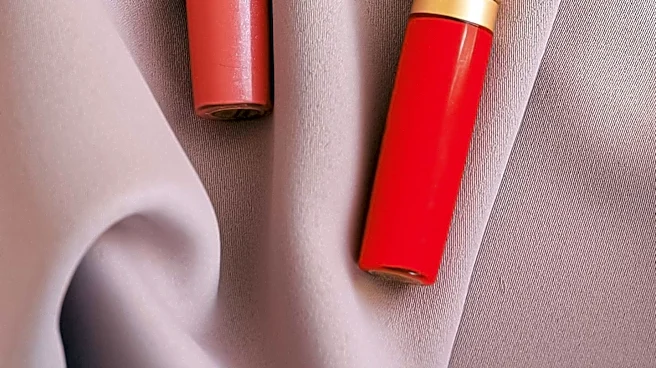
offering up to 12 hours of moisture. They typically deliver a sheer, candy-colored tint and a high-shine finish. Key ingredients often include natural oils such as Jojoba Oil, Shea Butter, Sweet Almond Oil, and Peach Extract, which contribute to their conditioning properties. Products like Too Faced Kissing Jelly Hydrating Lip Oil Gloss and Bisou Jelly Duo exemplify this trend, offering a blend of balm-like texture with a jelly outer layer for a natural yet glossy look. These lip oils can be applied directly to bare lips for a subtle effect or layered over lipstick to enhance shine and provide additional hydration.
Why It's Important?
The rise of jelly lip oils signifies a shift in the beauty industry towards hybrid products that prioritize both cosmetic appeal and skincare benefits. This trend caters to consumers seeking multi-functional items that simplify their routines while addressing common concerns like dry or chapped lips. The emphasis on natural oils and long-lasting moisture in these products reflects a growing consumer demand for healthier, more nourishing beauty options. For the beauty market, this means an expansion of product categories and increased competition in the lip care segment. Brands that successfully integrate effective hydration with desirable aesthetics are likely to capture a significant market share. This also impacts consumer behavior, as individuals may opt for these hybrid products over traditional lip balms or glosses, valuing the combined benefits of care and color.
What's Next?
The beauty industry is likely to see continued innovation in the jelly lip oil category, with brands exploring new formulations, ingredient combinations, and color ranges. There may be a focus on incorporating additional skincare actives, such as ceramides or hyaluronic acid, to further enhance their moisturizing and protective qualities. As consumer awareness of ingredient efficacy grows, brands will likely highlight the specific benefits of their natural oil blends and long-wear claims. We can also anticipate an increase in marketing efforts emphasizing the versatility of these products, promoting their use as both standalone lip treatments and as toppers for other lip color products. The success of jelly lip oils may also inspire similar hybrid products in other cosmetic categories, blurring the lines between makeup and skincare.
Beyond the Headlines
The popularity of jelly lip oils points to a broader cultural shift towards a more holistic approach to beauty, where self-care and product efficacy are as important as aesthetic results. This trend challenges traditional distinctions between makeup and skincare, encouraging consumers to view their beauty products as investments in their overall well-being. The demand for 'clean' and natural ingredients in these formulations also reflects a growing ethical consciousness among consumers, who are increasingly scrutinizing product labels for transparency and sustainability. This could lead to greater industry-wide adoption of ethical sourcing practices and environmentally friendly packaging. Furthermore, the emphasis on 'natural look' and 'sheer color' suggests a move away from heavy, full-coverage makeup towards more understated and effortless beauty standards, aligning with a desire for authenticity and comfort in personal expression.