




What's Happening?
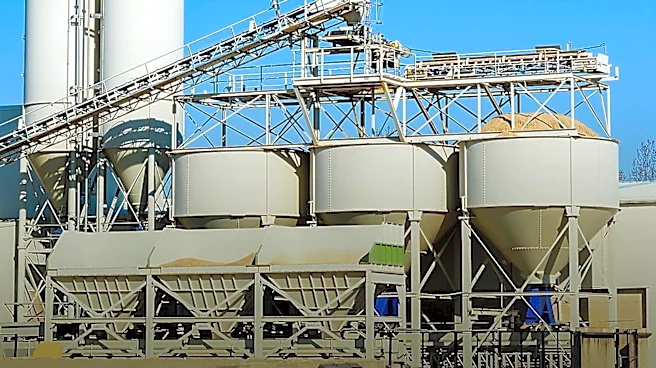
Fidelity Portfolio Manager Jed Weiss has observed a significant shift in Europe's cement industry, driven by stricter carbon regulations. These regulations, including the EU's Green Deal and 'Fit for 55' legislative package, coupled with carbon pricing,
have created a challenging environment for high-emission producers. Conversely, companies that proactively invested in low-cost, low-carbon production methods, often at a larger scale, are now experiencing a competitive advantage. Weiss, who manages the Fidelity International Growth Fund (FIGFX), notes that what was once perceived as a regulatory burden has transformed into a 'competitive moat' for these early adopters. The EU Emissions Trading System, which mandates companies to pay for each ton of carbon emitted, is a particularly impactful regulation, with costs continuing to rise. This has led to compressed profit margins for high-emission producers, while efficient, low-carbon leaders are benefiting from lasting cost, scale, and pricing advantages.
Why It's Important?
This development highlights the growing influence of environmental regulations on industrial sectors and their potential to reshape market dynamics. For U.S. businesses with international operations or those considering global expansion, particularly in carbon-intensive industries, this serves as a crucial case study. The European experience demonstrates that early adoption of sustainable practices, while potentially costly initially, can lead to significant long-term competitive advantages and financial stability. It underscores the increasing importance of environmental, social, and governance (ESG) factors in investment decisions and corporate strategy. Companies that fail to adapt to evolving carbon regulations risk diminished profitability and market share, while those that innovate in low-carbon production can gain a substantial edge. This trend could also influence U.S. policy discussions regarding carbon pricing and environmental standards, as the success of European models may inspire similar approaches domestically.
What's Next?
The trend observed by Jed Weiss suggests a continued divergence in the European cement industry, with further consolidation and market dominance by low-carbon producers. High-emission companies will likely face increasing pressure to either invest heavily in decarbonization technologies or risk becoming uncompetitive. This could lead to more mergers and acquisitions as companies seek to acquire low-carbon assets or expertise. For investors, the focus will remain on identifying companies with robust ESG strategies and proven capabilities in sustainable production. The success of these European policies could also accelerate the global adoption of similar carbon pricing mechanisms and environmental regulations, prompting industries worldwide to re-evaluate their carbon footprints and invest in greener technologies. This will likely drive further innovation in sustainable manufacturing processes and materials.
Beyond the Headlines
The transformation of Europe's cement industry due to carbon regulations extends beyond mere financial implications; it represents a fundamental shift in industrial philosophy. It challenges the traditional view that environmental protection is solely a cost center, demonstrating how it can be a driver of innovation, efficiency, and competitive advantage. This paradigm shift has broader implications for how industries globally will approach sustainability, moving from compliance-driven actions to strategic investments that enhance long-term value. It also raises ethical considerations about the responsibility of corporations in addressing climate change and the role of government in incentivizing sustainable practices. The 'competitive moat' created by early low-carbon adopters suggests a future where environmental performance is as critical to business success as financial performance, potentially leading to a more sustainable and resilient global economy.