




What's Happening?
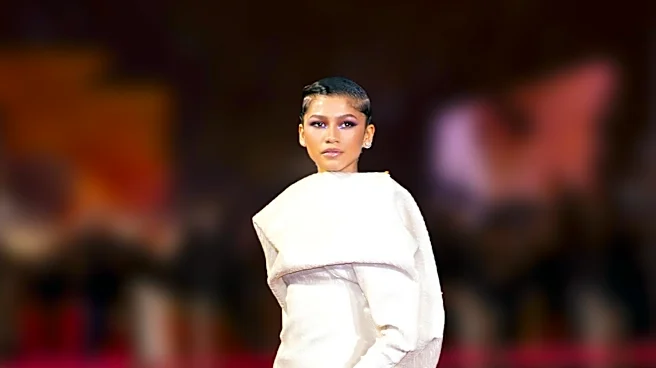
Zendaya and her stylist, Law Roach, are being recognized for their sophisticated approach to 'method dressing,' a styling trend where actors wear outfits that visually or thematically pay homage to the characters or films they are promoting. This strategy
extends beyond simple costume choices, aiming to construct a client's entire visual identity and narrative. Their collaboration, which began when Zendaya was a Disney Channel star, has evolved to create impactful red-carpet moments that tell a story. Examples include Zendaya's winged butterfly gown for 'The Greatest Showman,' metallic and desert-inspired looks for 'Dune,' tennis-themed ensembles for 'Challengers,' and a 'something old, something new, something borrowed, something blue' concept for 'The Drama' press run. Roach, who uses the title 'image architect,' views his work as creating a blueprint for a client's visual presence, using fashion as a form of storytelling.
Why It's Important?
This innovative approach to celebrity styling has significant implications for the entertainment and fashion industries. By transforming red-carpet appearances into extensions of a film's narrative, Zendaya and Law Roach elevate promotional strategies beyond traditional marketing. This method generates increased media attention and public engagement, creating a more immersive experience for audiences and enhancing the overall brand of both the actor and the project. It also influences fashion trends, as these carefully curated looks often become viral moments, inspiring designers and consumers alike. The concept of 'image architect' redefines the role of a stylist, emphasizing strategic vision and storytelling, which could lead to a broader shift in how celebrities and their teams approach public image management and promotional campaigns. This trend also highlights the growing intersection of film, fashion, and personal branding in contemporary culture.
What's Next?
The success of Zendaya and Law Roach's method dressing is likely to inspire other celebrities and their stylists to adopt similar strategic approaches. This could lead to a more theatrical and conceptually driven red-carpet landscape, where fashion becomes an even more integral part of a film's promotional cycle. Designers may increasingly collaborate with stylists to create bespoke pieces that directly reference cinematic themes, further blurring the lines between high fashion and entertainment. The 'image architect' model could become a more sought-after role in Hollywood, emphasizing comprehensive brand building over mere outfit selection. This trend may also prompt fashion critics and audiences to engage more deeply with the narratives embedded in celebrity styling, fostering a richer dialogue about the interplay between fashion, film, and personal identity.
Beyond the Headlines
Beyond its immediate impact on fashion and entertainment, method dressing, as exemplified by Zendaya and Law Roach, touches upon deeper psychological and cultural aspects of identity and presentation. It suggests that clothing is not merely adornment but a powerful tool for self-expression and narrative construction, both on and off-screen. The idea of 'dressing for the role you want' extends beyond celebrity, offering a framework for individuals to consciously use fashion to embody desired traits or project specific personas in their own lives. This approach can be seen as a form of personal branding, where external appearance is meticulously crafted to align with internal aspirations or professional goals. It also highlights the performative nature of identity in modern society, where individuals are constantly curating their image for various audiences, whether in a professional setting or on social media. The collaboration between Zendaya and Roach thus becomes a case study in how strategic visual communication can shape perception and influence cultural narratives.