


What's Happening?
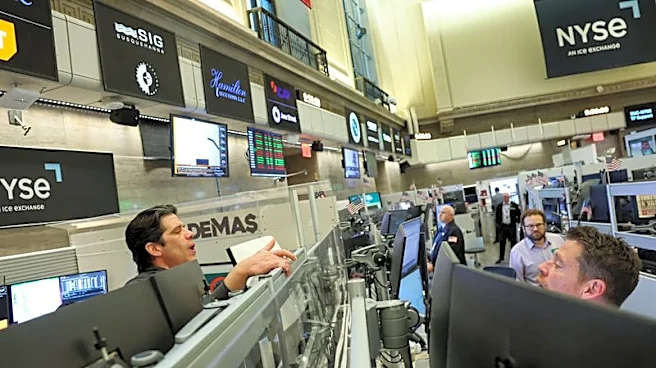
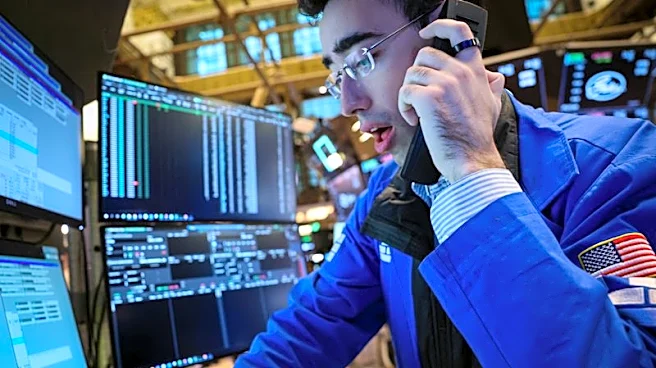
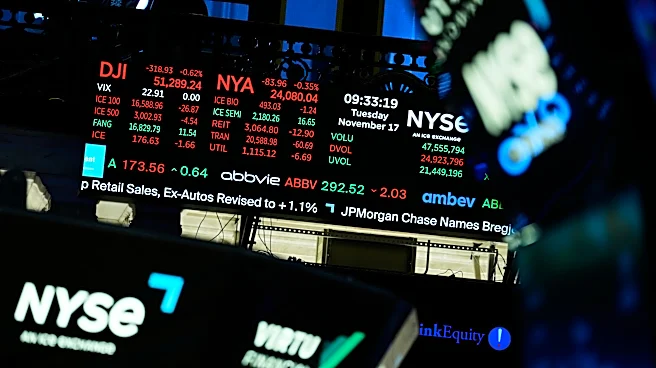
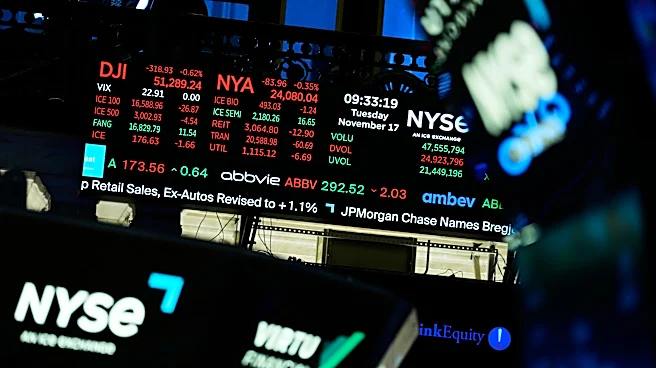
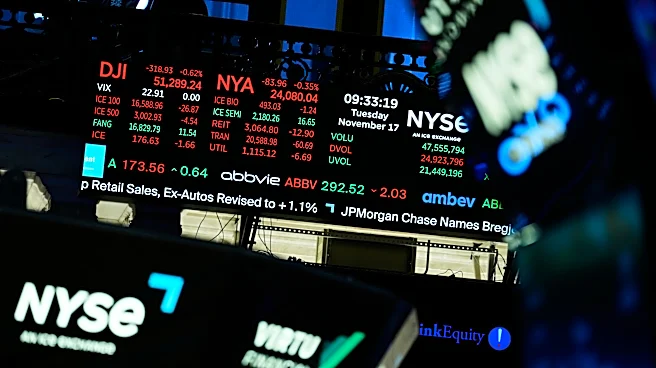
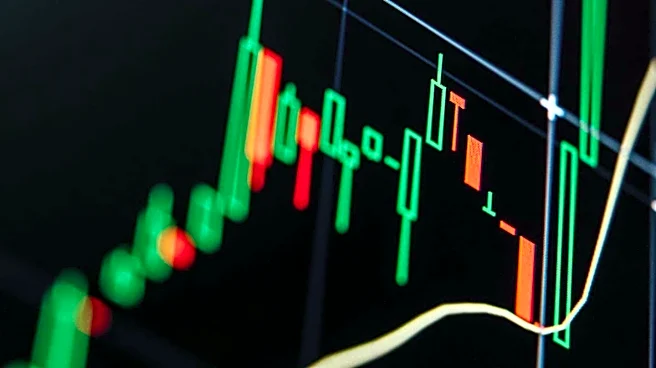
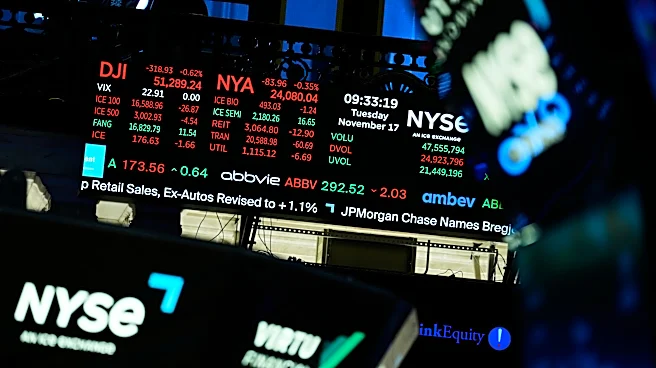
Wall Street experienced a significant shift on Friday, as U.S. investors moved away from AI-related growth stocks and into the relative safety of bonds and lower-priced value stocks. This rotation followed a rout in the technology sector, with the Nasdaq
composite declining over 4% for its third drop of 2% or more this week, marking its biggest weekly decline since last year's 'Liberation Day' rout. The Nasdaq is now down almost 2% for the year, relinquishing an annual gain of nearly 19% through early October. This downturn was exacerbated by a 46% slump in Nvidia and deep declines in other AI stocks, including a 12% drop in Broadcom. The median S&P 500 stock, however, is up almost 7% in 2026, outperforming the overall S&P 500, which has been hindered by the tech sector's struggles. This shift is partly attributed to expectations that high inflation will compel the Federal Reserve to raise interest rates, increasing borrowing costs and compressing valuations, making value stocks and Treasuries more attractive.
Why It's Important?
This market rotation signifies a re-evaluation of investment strategies in the U.S. financial landscape, moving away from the high-growth, high-valuation AI sector towards more stable, lower-priced assets. The decline in AI tech stocks, particularly bellwethers like Nvidia, indicates that investors are scrutinizing valuations and the sustainability of rapid growth in the AI boom. This shift is crucial for the broader economy as it reflects concerns about potential interest rate hikes by the Federal Reserve, which could impact borrowing costs for businesses and consumers, thereby affecting corporate earnings and market sentiment. The outperformance of value stocks and the S&P 500 value index, which is up 8% in 2026 compared to a 2% drop in the S&P 500 growth index, suggests a return to more cautious investing. This trend could lead to a more balanced market, reducing the concentration of wealth in a few tech giants and potentially benefiting a wider range of industries and companies that have been overlooked during the AI-driven rally.
What's Next?
Analysts and portfolio managers generally do not view the AI trade as fundamentally impaired, suggesting that the current rout might be a 'normal violent correction' that could improve valuations and attract long-term investors. However, the immediate future will likely see continued volatility as markets grapple with inflation data and the Federal Reserve's monetary policy decisions. The flight to safety, characterized by increased investment in value stocks and Treasury notes, is expected to persist as long as uncertainty regarding interest rates and economic growth remains high. Investors will be closely watching for signs of stabilization in the tech sector and any 'surprise' positive news that could trigger a new rally. This period of accumulation, as described by some market commentators, suggests that savvy investors may use the current dips to build positions in undervalued assets, anticipating a future rebound once market conditions become clearer and confidence returns.
Beyond the Headlines
The current market dynamics highlight a deeper tension between speculative growth and fundamental value in investment philosophy. The rapid ascent of AI stocks created a 'rock star' status for some tech leaders and companies, potentially leading to inflated valuations disconnected from underlying business health. The subsequent correction serves as a reminder of market cycles and the importance of diversification. This shift could also influence corporate strategies, prompting tech companies to focus more on profitability and sustainable growth rather than solely on market capitalization. Furthermore, the increased focus on value stocks might signal a broader economic recalibration, where traditional industries and sectors gain renewed attention. The 'flight-to-safety' trade also underscores the enduring role of government bonds as a safe haven during periods of market turbulence, influencing global capital flows and interest rate environments.