





What's Happening?
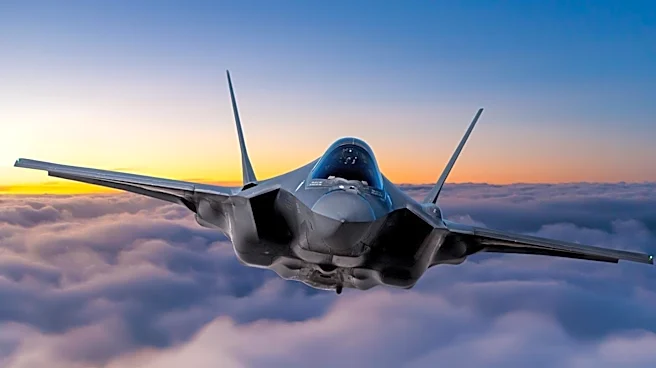
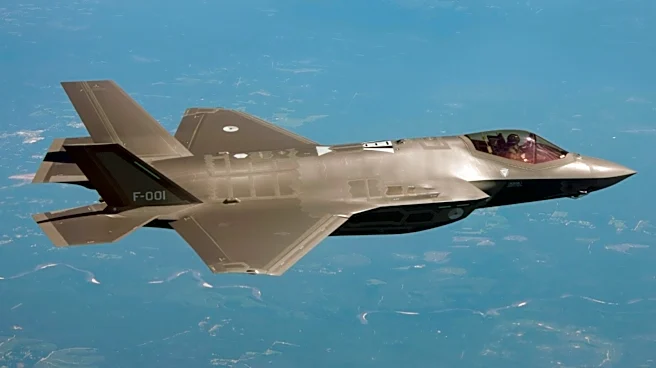
Lockheed Martin, a prominent U.S. aerospace and defense contractor, continues to rely heavily on its F-35 fighter program, which is projected to be a significant revenue source for the company into the 2040s. The U.S. Department of Defense plans to maintain
its procurement of the F-35 jet for over 15 years, providing Lockheed Martin with a substantial and consistent revenue stream. This program alone accounts for approximately 27% of the company's total revenue. Overall, nearly 72% of Lockheed Martin's 2025 sales were derived from contracts with the U.S. federal government. The company anticipates an 8% increase in revenue this year, reaching $81 billion, with net income expected to jump by 40% to over $7 billion. Lockheed Martin also integrates drone systems into U.S. defense systems to enhance security alongside its jet offerings.
Why It's Important?
Lockheed Martin's deep integration with U.S. federal government contracts, particularly the F-35 program, highlights the critical role defense spending plays in the U.S. economy and the stability of major defense contractors. The long-term commitment from the Defense Department to the F-35 ensures a predictable revenue stream for Lockheed Martin, which is appealing to investors seeking stability. However, this concentration of revenue also presents a significant risk. Any shifts in U.S. defense priorities, budget cuts, or technical failures within the F-35 program could severely impact the company's financial performance. This reliance underscores the vulnerability of defense contractors to federal policy changes and budget allocations, affecting not only the company's profitability but also the broader defense industry and its workforce.
What's Next?
Lockheed Martin will likely continue to focus on fulfilling its existing government contracts, particularly the F-35 program, while also seeking to diversify its offerings and client base to mitigate risks associated with revenue concentration. The company will need to navigate intense competition from other defense contractors for high-stakes government projects. Future developments in U.S. defense policy and budget decisions will directly influence Lockheed Martin's long-term financial outlook. Investors will closely monitor any potential shifts in defense priorities or budget allocations that could affect the F-35 program or other major government contracts, as these factors will determine the company's sustained profitability and growth.
Beyond the Headlines
The substantial reliance of Lockheed Martin on U.S. federal government contracts raises broader questions about the interplay between national security, industrial policy, and economic stability. The F-35 program, while a cornerstone of U.S. air power, also represents a significant financial commitment for taxpayers. The concentration of defense spending on a few major contractors like Lockheed Martin can lead to a powerful lobbying presence, potentially influencing defense priorities and budget allocations. This dynamic can create a feedback loop where the economic health of major defense companies becomes intertwined with national security decisions, potentially limiting flexibility in defense spending and strategic planning. The ethical implications of such close ties between government and industry, particularly in the defense sector, warrant ongoing scrutiny.