


What's Happening?
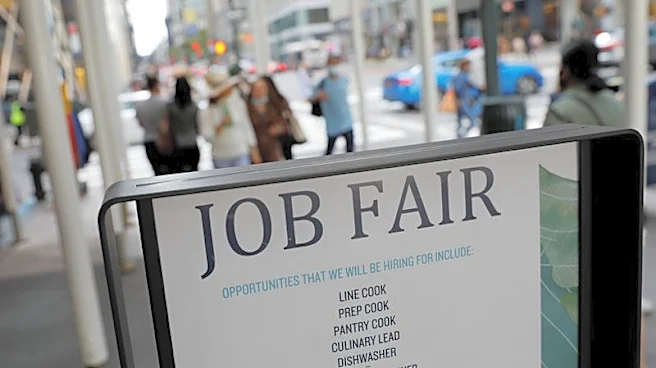
The U.S. economy experienced an unexpected decline in jobs during July, with nonfarm payrolls falling by a seasonally adjusted 23,000, according to the Bureau of Labor Statistics. This decline contrasts with the Dow Jones consensus forecast, which anticipated
a gain of 83,000 jobs. The unemployment rate, however, edged lower to 4.1% as the labor force participation rate fell to 61.4%, marking its lowest point in over five years. The job losses were primarily driven by a 50,000 decline in local government education and a 19,000 reduction in retail jobs. Despite these losses, the healthcare sector added 22,000 jobs, although this was below its 12-month average. The report also revised job numbers for June and May downward, indicating a weaker labor market than previously thought.
Why It's Important?
The unexpected job losses in July highlight ongoing challenges in the U.S. labor market, which could have significant implications for economic policy and growth. A weakening labor market may complicate the Federal Reserve's efforts to balance job growth with inflation control. The decline in labor force participation suggests that fewer Americans are working or seeking employment, which could impact consumer spending and overall economic activity. Additionally, the lack of significant wage growth may further strain household budgets amid rising inflation. These factors could influence the Federal Reserve's decisions on interest rates, potentially delaying rate hikes to support economic recovery.
What's Next?
The Federal Reserve will likely closely monitor upcoming economic data, including inflation reports, to determine its next steps regarding interest rates. The unexpected job losses may prompt the Fed to maintain a cautious approach, potentially delaying rate hikes to avoid further destabilizing the labor market. Policymakers will need to consider the broader economic implications of a weakening job market, including its impact on consumer confidence and spending. Businesses and investors will also be watching for any policy adjustments that could affect economic growth and market stability.