





What's Happening?
The global market for coated steel used in data centers is projected to grow significantly, from an estimated $5.64 billion in 2025 to $22.80 billion by 2036, exhibiting a compound annual growth rate (CAGR) of 13.3% during the forecast period. This growth is primarily
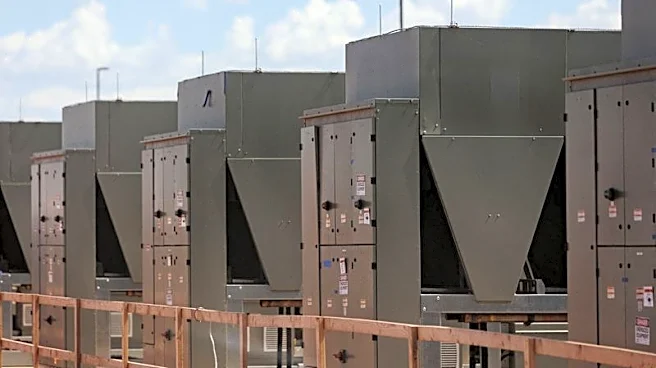
driven by the increasing construction of data centers, rising rack densities, and a growing demand for factory-certified panel systems. A key trend in the industry is the shift from conventional zinc coatings to zinc-magnesium (ZM) coatings. ZM coatings offer comparable corrosion protection with a lower coating mass, which helps reduce material costs, embedded emissions, and embodied carbon. The adoption of ZM coatings is further supported by their inclusion under the EN 10346 standard, facilitating specification changes without extensive product qualification. Insurer requirements are also accelerating the transition from site-built cladding to factory-manufactured panel systems with system-level approvals.
Why It's Important?
This market expansion is crucial for the U.S. technology and construction sectors, as data centers are fundamental infrastructure for the digital economy. The demand for more efficient and environmentally friendly materials, such as zinc-magnesium coated steel, reflects a broader industry push towards sustainability and cost optimization. U.S. companies involved in steel manufacturing, data center construction, and material supply chains stand to benefit from this growth. The shift to ZM coatings can lead to reduced operational costs for data center operators due to lower material and carbon footprints. Regulatory and trade developments, such as the EU Carbon Border Adjustment Mechanism and increased Section 232 duties on steel and aluminum in the U.S., also play a significant role, influencing material sourcing and pricing for domestic and international projects. These factors can impact the competitiveness of U.S. manufacturers and the overall cost of data center development.
What's Next?
The market is expected to continue its trajectory of growth, with ongoing innovation in coating technologies and panel systems. The recently published BS EN 10346:2026 standard will likely further influence product specifications and adoption rates. Data center developers and material suppliers will need to adapt to evolving regulatory landscapes, including carbon emission accounting and trade tariffs, which could affect supply chain strategies and investment decisions. The demand for higher rack densities will continue to drive the need for specialized internal partitions, containment systems, and equipment enclosures, creating new opportunities for manufacturers. However, market expansion may be constrained by plant-specific approvals, recurring factory audits, regional fire classifications, and inconsistencies in service-life comparisons across coating alloys, necessitating continued industry collaboration and standardization efforts.
Beyond the Headlines
The move towards more sustainable and efficient materials in data center construction, exemplified by zinc-magnesium coatings, highlights a broader industry-wide commitment to reducing environmental impact. This trend extends beyond just materials to encompass energy efficiency, water conservation, and responsible waste management in data center operations. The emphasis on factory-certified panels and traceable local supply chains also underscores a growing focus on quality control, supply chain resilience, and ethical sourcing. This could lead to increased scrutiny of manufacturing processes and a preference for suppliers who can demonstrate transparency and adherence to environmental and labor standards. The long-term implications include a potential shift in manufacturing hubs and a greater integration of sustainability metrics into procurement decisions across the data center industry.