




What's Happening?
The Roberto Cavalli Home tableware collection draws inspiration from the brand's Florentine origins and the artistic heritage of the city. Roberto Cavalli, who studied art in Florence before entering fashion, founded his house in 1970, becoming known
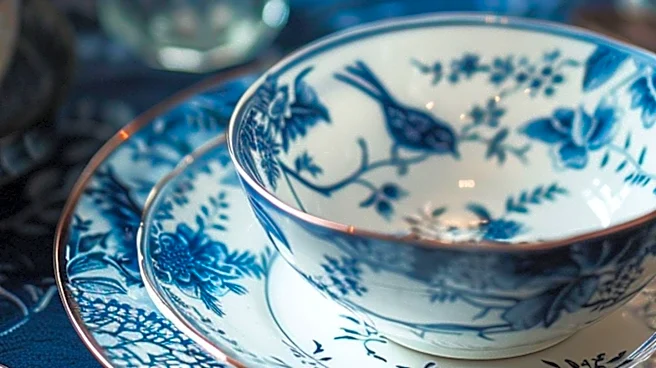
for incorporating animal prints as symbols of confidence and glamour. This spirit is extended to the home collection, particularly in its tableware. The designs feature familiar, rounded shapes adorned with distinctive patterns, gold or platinum rims, and the RC signature. Key designs include 'Palazzo Pitti,' which blends classic flowers with animal prints, 'Lizard Platinum,' offering an embossed reptile texture with platinum-toned rims, and 'Lizzard Sunrise,' which applies the reptile texture in soft aqua, green, and grey tones with 24k gold accents. The collection also includes espresso sets like 'Africa' and 'Flowers,' champagne goblets, and decorative vases such as the 'Tiger High Vase.' The bone china pieces are produced in South Korea, known for its fine porcelain craftsmanship, while the designs originate from the Roberto Cavalli house in Florence, Italy.
Why It's Important?
The Roberto Cavalli Home tableware collection is important as it represents the expansion of a luxury fashion brand into the home goods market, leveraging its established brand identity and design philosophy. This move allows consumers to integrate the brand's signature aesthetic—characterized by flamboyant prints and a sense of glamour—into their daily living spaces. For the luxury market, it signifies a trend of lifestyle branding, where high-end fashion houses offer a comprehensive range of products beyond apparel to create a holistic brand experience. This strategy can enhance brand loyalty and open new revenue streams. The collection's emphasis on fine bone china and metallic finishes also highlights a commitment to quality and craftsmanship, appealing to consumers who value both design and durability in their home furnishings. The availability of various pieces, from espresso sets to vases, allows for gradual collection building, making luxury home decor more accessible to a broader segment of affluent consumers.
What's Next?
The Roberto Cavalli Home collection is expected to continue its presence in the luxury home goods market, with potential for new design introductions and seasonal collections. The brand's strategy of offering pieces that can be mixed with existing dinnerware suggests a focus on versatility and integration into diverse home aesthetics. Future developments may include expanding the range of home decor items beyond tableware, further solidifying Roberto Cavalli's position as a comprehensive lifestyle brand. The brand will likely continue to emphasize the artistic and luxurious aspects of its products, appealing to consumers who seek unique and high-quality items for their homes. Marketing efforts will probably highlight the Florentine heritage and the brand's iconic design elements, reinforcing its identity in the competitive luxury market. The recommendation for hand washing due to metallic finishes indicates a continued focus on product care and longevity, which could influence future material choices or care instructions.
Beyond the Headlines
Beyond the immediate market implications, the Roberto Cavalli Home tableware collection reflects a broader cultural shift towards viewing home spaces as extensions of personal style and luxury. In an era where home entertaining and interior design have gained significant prominence, luxury brands are increasingly catering to consumers who desire to curate their living environments with the same attention to detail as their wardrobes. This trend blurs the lines between fashion and home decor, transforming everyday objects into statements of personal taste and affluence. The collection's use of animal prints, a signature of the Cavalli brand, also speaks to a continued fascination with exoticism and bold aesthetics in design. Furthermore, the emphasis on craftsmanship, with bone china produced in South Korea, highlights the globalized nature of luxury production, where design concepts from one region are brought to life through specialized manufacturing in another, creating a blend of cultural influences in the final product.