

What's Happening?
The 2030 FIFA World Cup is set to be a landmark event, with matches hosted across multiple continents for the first time. The tournament will be jointly hosted by Morocco, Portugal, and Spain, marking a significant expansion in the World Cup's geographical
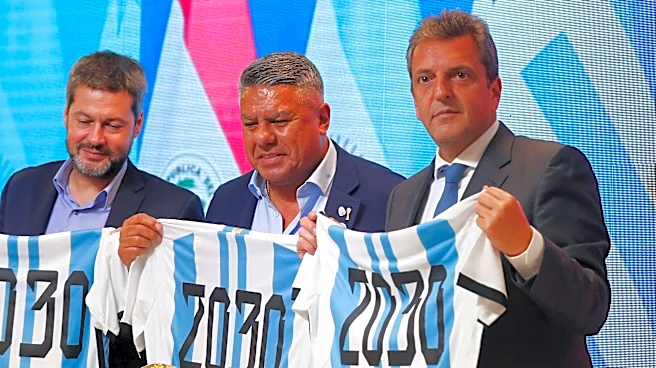
footprint. Additionally, to commemorate the 100-year anniversary of the World Cup, special matches will be held in Uruguay, Argentina, and Paraguay. This decision follows a competitive bidding process, with the Morocco-Portugal-Spain bid selected over a South American proposal. The tournament will feature 48 teams, with discussions ongoing about potentially expanding this number.
Why It's Important?
The 2030 World Cup's unique hosting arrangement reflects FIFA's efforts to globalize the tournament and celebrate its centennial. This approach could set a precedent for future international sporting events, promoting cross-continental collaboration. The inclusion of South American countries in the centenary celebrations acknowledges the region's historical significance in World Cup history. However, the decision has also sparked discussions about the eligibility of continents to host future tournaments, with implications for global sports diplomacy and regional representation in international events.
What's Next?
As preparations for the 2030 World Cup continue, stakeholders will focus on logistical planning and infrastructure development across the host countries. FIFA will also need to address potential challenges related to travel and coordination between the diverse host locations. The expansion of participating teams is another key issue, with potential impacts on tournament structure and scheduling. The event's success could influence future decisions on World Cup hosting and the broader strategy for international sports events.