







What's Happening?
The Netflix series 'The Hunting Wives' will move its Season 3 production from North Carolina to Georgia. This decision follows changes made by the North Carolina General Assembly to how the state distributes film incentives. Producer Joan Cunningham informed
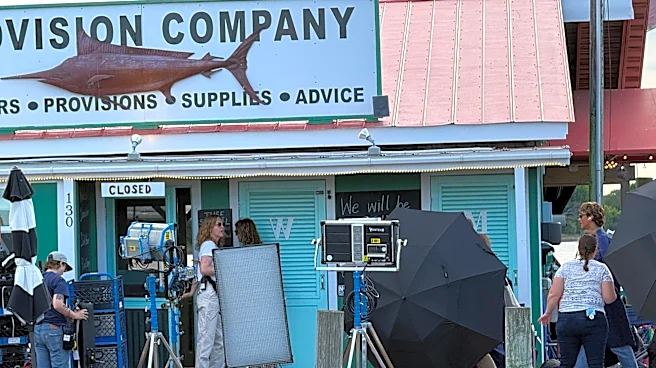
production staff via email that the show's budget relies heavily on these funds, and without them, continuing to shoot in North Carolina is not feasible. Previously, the Department of Commerce managed film grants as a cash flow program, allowing funding based on future appropriations. However, the General Assembly has shifted this to a strict annual appropriations basis, meaning funds can only be distributed from money currently possessed. Commerce Secretary Lee Lilley confirmed that discussions with Lionsgate to retain production in the state were unsuccessful due to the current situation. Senator Michael Lee of Wilmington stated that these changes were implemented because the Commerce Department's operations were inconsistent with state law, although Commerce maintains it followed legislative staff instructions. The series, which follows a wealthy Texas socialite and her friends, filmed its first two seasons around Charlotte, including locations like downtown Mooresville and Dilworth Tasting Room. Season 1 received nearly $12 million in incentives, and Season 2 was awarded up to $15 million, though that money has not yet been distributed.
Why It's Important?
This relocation marks another significant loss for North Carolina's film sector, following previous departures of shows like Showtime's 'Homeland' and 'Banshee.' The shift in film incentive distribution policy directly impacts the state's ability to attract and retain major productions, which in turn affects local economies. Film productions bring substantial investment, create jobs for thousands of residents, and support various local businesses, from catering to construction. The change from a cash flow program to a strict annual appropriations basis introduces uncertainty for production companies, making North Carolina a less attractive option compared to states with more stable and predictable incentive structures, such as Georgia. Governor Josh Stein emphasized the importance of the film industry to North Carolina's economy, highlighting its role in job creation and investment, and stressed the need to provide productions with the certainty required for long-term investment. The inability to secure productions like 'The Hunting Wives' could lead to a decline in film-related employment and economic activity within the state, while states with more favorable policies stand to gain.
What's Next?
Commerce Secretary Lee Lilley indicated that his department is actively working with the General Assembly to address and rectify the issues with the film incentive program. However, he could not provide a specific timeline for when new productions might expect to receive incentives under a revised system. Despite the current challenges, all productions that were previously promised grant funding will still receive those commitments. The ongoing discussions between the Commerce Department and the General Assembly will determine the future competitiveness of North Carolina's film industry. The state will need to establish a more stable and appealing incentive framework to prevent further departures and attract new productions. The success of these efforts will be crucial in regaining the confidence of major studios and ensuring the long-term viability of the film sector in North Carolina. Meanwhile, Georgia, with its established film incentives, is likely to continue benefiting from productions relocating from other states.
Beyond the Headlines
The relocation of 'The Hunting Wives' highlights a broader issue concerning the economic impact of state-level policy decisions on specific industries. The debate over film incentives often involves balancing fiscal responsibility with economic development. While some argue that such incentives are a drain on taxpayer money, others contend they are essential for job creation, tourism, and overall economic growth. The shift in North Carolina's policy reflects a legislative re-evaluation of how public funds are allocated to the film industry, potentially driven by concerns over accountability or the effectiveness of previous programs. This situation underscores the competitive nature of the film industry, where states actively vie for productions through financial incentives. The long-term implications for North Carolina could include a diminished reputation as a film-friendly state, a loss of skilled labor in the film sector, and a reduction in the cultural and economic benefits associated with hosting major productions. Conversely, states like Georgia that maintain robust incentive programs are likely to see continued growth in their film industries, further solidifying their positions as production hubs.