






What's Happening?
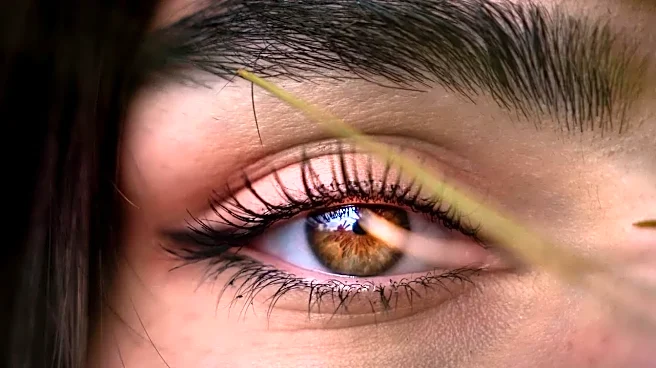
The 'tired girl' beauty trend, also known as 'Igari makeup,' originating in Japan, is gaining significant global appeal. This trend focuses on creating a youthful, slightly tired appearance under the eyes, which is intended to convey raw femininity and
vulnerability. Unlike Western beauty standards that often prioritize concealing under-eye puffiness, Igari makeup embraces and enhances this feature. Techniques such as placing a soft shimmer or highlight under the eyes are used to mimic natural under-eye puffiness, creating an innocent and youthful look often associated with anime characters. This approach is part of a broader movement in Japanese beauty towards softer, more nuanced makeup styles that emphasize enhancement rather than complete transformation. The trend has resonated in editorial makeup worldwide, with reinterpretations appearing in fashion shoots from Paris to Los Angeles. Other influential Japanese beauty trends include 'yoga skin,' which describes a relaxed, balanced, and subtly glowing complexion, and 'mizu skin,' which celebrates intense moisture and a dewy, translucent look.
Why It's Important?
The global adoption of the 'tired girl' makeup trend signifies a shift in beauty ideals, moving away from heavily contoured and perfected looks towards more natural, subtle, and individual-enhancing aesthetics. This trend, alongside others like 'yoga skin' and 'mizu skin,' highlights the increasing influence of Japanese beauty philosophies on the global stage, including in the U.S. It challenges conventional Western beauty standards that often dictate the concealment of perceived imperfections, such as under-eye circles. For the beauty industry, this means a growing market for products that support natural enhancement, hydration, and subtle glow, rather than heavy coverage or dramatic transformation. Consumers are increasingly seeking products and techniques that respect individuality and prioritize skin health and natural radiance. This cultural exchange in beauty trends also reflects a broader appreciation for diverse aesthetic values and a move towards more mindful and self-care-oriented beauty routines.
What's Next?
The continued rise of the 'tired girl' trend and other Japanese-inspired beauty philosophies suggests a sustained demand for products and techniques that promote natural, subtle enhancement. Beauty brands in the U.S. and globally are likely to further adapt their product lines and marketing strategies to cater to this evolving consumer preference. This could include an increased focus on skincare-infused makeup, lightweight formulas, and products designed to create a 'lit-from-within' glow or mimic natural skin textures. Makeup artists and beauty influencers will likely continue to explore and popularize variations of these trends, further integrating them into mainstream beauty culture. Educational content on achieving these looks, emphasizing technique over product quantity, will also likely proliferate. The trend may also encourage more open discussions about diverse beauty standards and the psychological impact of embracing natural features versus striving for idealized perfection.
Beyond the Headlines
The 'tired girl' beauty trend, while seemingly superficial, carries deeper cultural and psychological implications. It challenges the often-unrealistic beauty standards perpetuated by social media and advertising, which frequently promote an image of constant perfection and flawlessness. By embracing a 'slightly tired' look, the trend subtly pushes back against the pressure to appear perpetually energetic and flawless, fostering a sense of authenticity and vulnerability. This could contribute to a more inclusive beauty landscape where diverse appearances are celebrated. Furthermore, the emphasis on 'enhancement over transformation' aligns with a growing consumer desire for transparency and natural ingredients in beauty products. It reflects a broader societal shift towards self-acceptance and a more holistic approach to well-being, where beauty is seen as an extension of health and self-care rather than a means of masking or altering one's true self. This trend may encourage individuals to redefine what they consider beautiful, moving towards an appreciation of nuanced and individual characteristics.