







What's Happening?
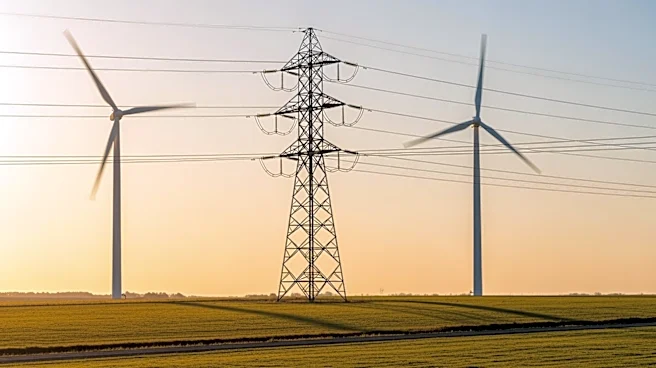
The SunZia project, a significant clean energy infrastructure initiative, has successfully launched a 550-mile transmission line connecting New Mexico's wind power to California, including San Francisco. This project, developed by Southwestern Power Group
and now owned by Pattern Energy Group, utilizes Hitachi Energy's high voltage direct current (HVDC) technology to efficiently transmit large amounts of power over long distances. Initially proposed in 2006, the project faced numerous delays, including concerns about interference with the White Sands missile range. However, it overcame these challenges with a new route and increased funding, culminating in its recent operational launch. The project is expected to deliver more power than the Hoover Dam, supplying clean energy to Arizona and California.
Why It's Important?
The SunZia project represents a major advancement in the U.S. clean energy sector, demonstrating the potential of HVDC technology to enhance grid reliability and efficiency. By connecting renewable energy sources across state lines, it sets a precedent for future infrastructure projects aimed at reducing reliance on fossil fuels. This development is particularly significant in the context of ongoing efforts to transition to sustainable energy sources, as it highlights the feasibility of large-scale renewable energy projects overcoming regulatory and logistical hurdles. The project's success could encourage similar initiatives, contributing to national energy independence and environmental goals.
What's Next?
Following the successful launch of the SunZia project, there is potential for similar clean energy infrastructure projects to be developed across the U.S. Pattern Energy Group has indicated an interest in expanding such initiatives, leveraging HVDC technology to connect more regions with renewable energy sources. This could lead to increased investment in clean energy and further integration of renewable resources into the national grid. Stakeholders, including government agencies and private companies, may explore opportunities to replicate SunZia's model, potentially transforming the U.S. energy landscape.