








What's Happening?
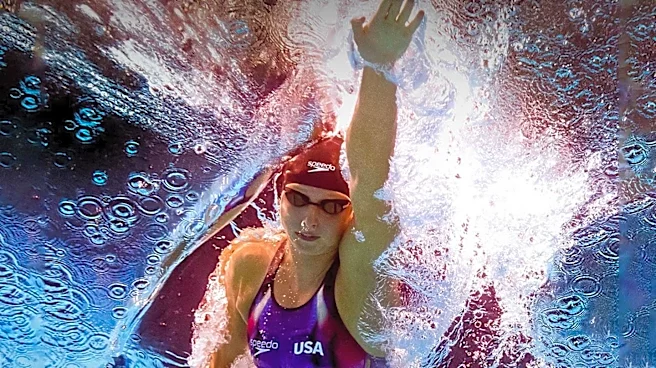
Ariarne Titmus, a 26-year-old Australian swimmer and four-time Olympic gold medalist, is re-evaluating the 'all-or-nothing' mindset that defined her competitive career. After retiring from competitive swimming following the 2024 Paris Olympics, Titmus shared
in an interview with The Guardian that she is actively trying to unlearn this intense approach. She described her previous outlook as 'win or lose,' 'achieve it, or fail,' acknowledging that such a black-and-white perspective is not sustainable for life outside of elite sports. Titmus's decision to change her mindset was influenced by a 2023 surgery to remove an ovarian growth, which affected her fertility and prompted her to seek more balance in her life.
Why It's Important?
Titmus's experience highlights a common challenge faced by many elite athletes transitioning into retirement: adapting from a highly structured, performance-driven life to a more balanced existence. Her candid reflection on the mental shift required underscores the psychological toll and identity struggles that can accompany the end of a professional sports career. This narrative is important for understanding athlete well-being beyond competition, emphasizing the need for mental health support and resources for athletes as they navigate post-career life. Her story resonates with other retired athletes, like former NHL player Brooks Laich and skier Lindsey Vonn, who have also spoken about the difficulties of finding new purpose and focus after leaving their respective sports.
What's Next?
Ariarne Titmus will continue to navigate her post-swimming life, focusing on developing a more balanced and less intense personal outlook. Her public discussion of this transition may encourage other athletes to address similar challenges and seek support. This could also prompt sports organizations and athlete welfare programs to enhance resources for mental health and career transition planning for retiring athletes. As Titmus moves forward, her journey will likely serve as an example for how elite competitors can successfully adapt to life beyond the pool, track, or field, emphasizing personal growth over competitive achievement.
Beyond the Headlines
The 'all-or-nothing' mentality described by Ariarne Titmus is often cultivated in high-performance environments, where success is paramount. While this mindset can drive extraordinary achievements, it can also lead to burnout, anxiety, and a narrow sense of self-worth tied solely to athletic performance. Titmus's story brings to light the broader societal implications of such intense competitive cultures, prompting questions about how to foster resilience and holistic well-being in athletes from a young age. Her experience, particularly the impact of her health scare on her perspective, underscores the importance of valuing personal health and life balance over relentless pursuit of external validation, even for those at the pinnacle of their sport.