





What's Happening?
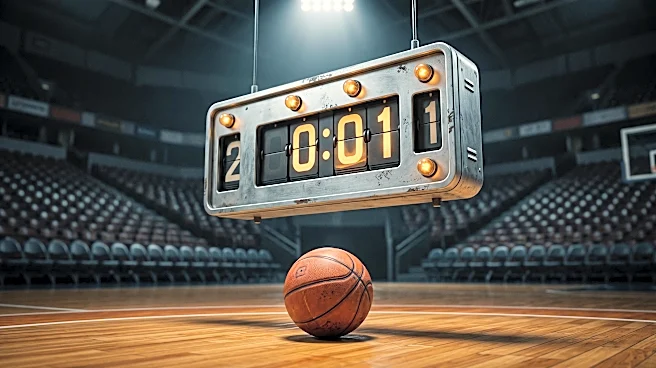
The 1972 Olympic men's basketball final between the United States and the Soviet Union remains one of the most controversial events in Olympic history. With three seconds left, Doug Collins made two free throws, giving the U.S. a 50-49 lead. What followed
was a series of disputed clock resets and interventions. The Soviet Union was granted multiple opportunities to inbound the ball due to a contested timeout request, a malfunctioning clock, and the intervention of R. William Jones, then secretary-general of the International Amateur Basketball Federation. Ultimately, Aleksandr Belov scored the winning basket for the Soviet Union, ending the U.S.'s 63-game Olympic winning streak and securing their first Olympic gold medal in basketball. The U.S. team protested the result, but a five-member appeals jury upheld the Soviet victory by a 3-2 vote. In response, all 12 U.S. players unanimously refused to accept their silver medals, a stance they have maintained for over five decades.
Why It's Important?
This event holds significant historical importance beyond the realm of sports, reflecting the intense geopolitical rivalry of the Cold War era. The controversy fueled suspicions of political bias in international sports officiating, particularly given the alignment of the appeals jury votes. The U.S. team's refusal to accept their medals became a powerful symbol of their belief in an unjust outcome, creating a lasting legacy of protest against perceived unfairness. The incident also highlighted critical issues in sports governance, particularly concerning the authority of officials and the clarity of rules in high-stakes competitions. It fundamentally altered the perception of U.S. dominance in Olympic basketball and set a precedent for future international sporting rivalries, demonstrating that even established powerhouses could be challenged and defeated under contentious circumstances.
What's Next?
More than five decades later, the official result of the 1972 Olympic men's basketball final remains unchanged, with the Soviet Union recognized as the gold medalist and the United States as the silver medalist. The U.S. players continue to refuse their silver medals, which largely remain unclaimed, with seven held in the Olympic Museum's collections in Lausanne, Switzerland, and the whereabouts of five others unknown. Efforts by former players, such as Tom McMillen, to have the medals transferred to a museum without personal acceptance have been rejected by the International Olympic Committee (IOC), which maintains that players must accept them through established processes. It is unlikely that the official result will ever be overturned, and the controversy will continue to be a subject of historical debate and analysis, particularly regarding sportsmanship, officiating integrity, and the intersection of sports and politics.
Beyond the Headlines
The 1972 Olympic basketball final transcends a simple sports dispute, delving into deeper themes of justice, national pride, and the integrity of international institutions. The enduring refusal of the U.S. players to accept their medals speaks to a profound moral stand against what they perceived as a stolen victory, illustrating the lasting psychological impact of such events on athletes. The incident also serves as a case study in how administrative errors and ambiguous rules can escalate into major international incidents, questioning the impartiality of governing bodies. Furthermore, the event's narrative has evolved over time, with historical footage and investigations offering more nuanced perspectives on the sequence of events, challenging simplistic conspiracy theories while still acknowledging significant procedural failures. This ongoing debate underscores the complexity of historical truth and the subjective nature of memory in high-stakes competitive environments.