








What's Happening?
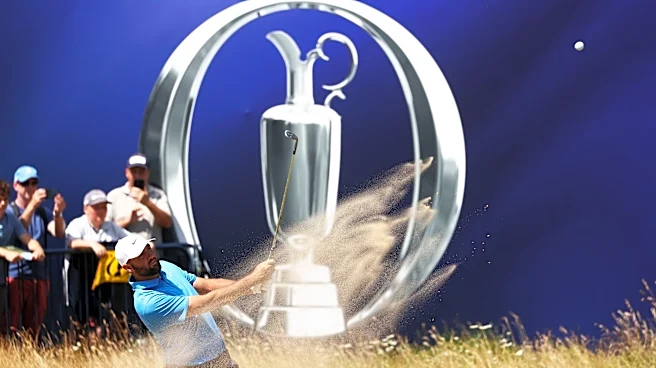
Scottie Scheffler, the reigning champion of the British Open, shared his philosophical views on competition and legacy during a press conference at Royal Birkdale. Known for his deep reflections, Scheffler discussed the fleeting nature of victory and the importance
of understanding one's purpose in the sport. He humorously acknowledged the morbid nature of his comments, stating, 'This year, we're all going to die,' which drew laughter from the audience. Scheffler emphasized that he does not play for historical recognition but for the joy and challenge of competition. He also addressed the mental challenges of the sport, noting the constant scrutiny and pressure from fans and media.
Why It's Important?
Scheffler's reflections highlight the psychological aspects of professional sports, where athletes must balance personal fulfillment with public expectations. His comments resonate with broader discussions about mental health in sports, emphasizing the need for athletes to find intrinsic motivation beyond accolades. This perspective is particularly relevant as sports organizations increasingly focus on the well-being of athletes. Scheffler's approach may inspire other athletes to prioritize personal satisfaction and mental health over external validation, potentially influencing how sports are perceived and managed.
What's Next?
As Scheffler prepares for the British Open, his focus on personal purpose and mental resilience will be tested on the course. His comments may prompt discussions among fellow golfers and sports psychologists about the importance of mental health strategies in competitive sports. The golf community and media will likely continue to scrutinize his performance and philosophical stance, potentially influencing how future tournaments are approached by players and organizers.
Beyond the Headlines
Scheffler's remarks also touch on the cultural expectations of athletes to constantly achieve and the societal pressures to leave a lasting legacy. His candidness about not being concerned with historical remembrance challenges traditional narratives of success in sports. This could lead to a broader cultural shift in how success is defined, not just in sports but in other competitive fields, encouraging a more holistic view of achievement that values personal growth and satisfaction.