









What's Happening?
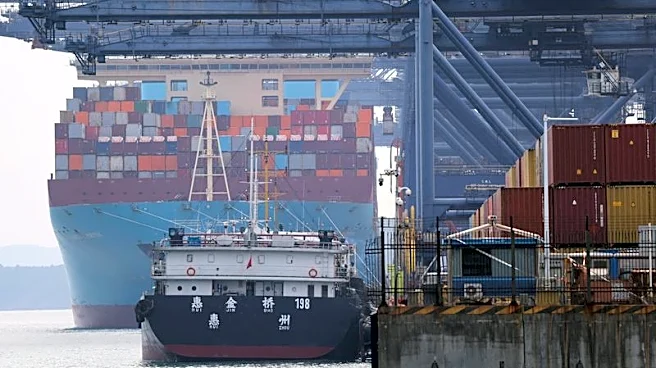
The global cargo securing netting market is projected to grow at a compound annual growth rate (CAGR) of approximately 5.2% from 2026 to 2035, according to a report by IndexBox. This growth is largely driven by the increasing complexity of global electronics
and electrical equipment logistics, which necessitates the use of high-strength, anti-static netting to protect sensitive components during transport. The market is expected to reach an index value of 165 by 2035, relative to 2025. The demand for cargo securing netting is primarily fueled by the need for aftermarket replacement and recurring procurement, which account for an estimated 55-65% of total unit demand. The market is heavily reliant on imports, with over 50-60% of consumption in regions like North America and Europe supplied by producers in China, India, and Southeast Asia.
Why It's Important?
The expansion of the cargo securing netting market is significant for several reasons. It highlights the growing importance of logistics in the electronics sector, where the protection of sensitive components is crucial. The reliance on imports underscores the interconnectedness of global supply chains and the dependence on Asian manufacturers for specialized netting products. This growth also reflects broader trends in industrial automation and the increasing demand for high-tension netting solutions as manufacturing processes become more automated. The market's expansion could lead to increased innovation in materials and design, as manufacturers seek to meet the evolving needs of the electronics and semiconductor industries.
What's Next?
Looking ahead, the cargo securing netting market is expected to continue its growth trajectory, driven by steady global economic growth and stable trade flows. The electronics and semiconductor sectors will remain key demand drivers, with anti-static and contamination-free netting becoming standard. The market will also see increased adoption of digital tracking and RFID integration, although this will remain a niche segment through 2030. Manufacturers are likely to focus on material innovation and supply chain resilience to meet the growing demand for specialized netting solutions.