




What's Happening?
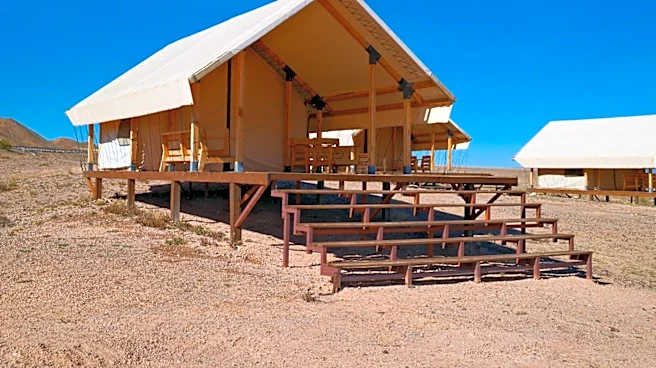
Modular glamping is emerging as a strategic approach for resorts to enhance flexibility, accelerate development, and improve long-term return on investment (ROI) within the hospitality industry. This method involves using prefabricated structures, luxury
tents, and modular accommodations that can be manufactured off-site and then transported and installed. This allows resorts to adapt their capacity to fluctuating demand, offering different configurations for various guest segments like wellness retreats, couples, or families. The approach enables phased investment, meaning operators can develop accommodations in stages, evaluate guest demand, and plan future expansion based on actual performance rather than committing to large-scale permanent construction upfront. This flexibility is particularly beneficial for projects in emerging destinations, allowing for a more adaptable investment strategy.
Why It's Important?
The adoption of modular glamping is significant for the U.S. hospitality industry as it addresses the need for adaptability in a rapidly changing market. Traditional resort construction often entails substantial upfront investments and lengthy development periods, which can be a barrier to responding quickly to market shifts or new investment opportunities. Modular glamping provides a solution by allowing resorts to expand or reconfigure their properties more efficiently and with less financial risk. This approach also aligns with the growing consumer demand for eco-luxury and nature-based travel experiences, enabling resorts to offer distinctive accommodations that maintain a strong connection to the natural environment. By offering flexible layouts and architectural adaptability, modular glamping can help U.S. resorts differentiate their guest experience and attract a broader range of travelers, ultimately boosting their competitiveness and profitability.
What's Next?
The trend of modular glamping is expected to continue growing as more U.S. resorts recognize its benefits in terms of operational flexibility and financial viability. Developers are likely to increasingly integrate modular units into their expansion plans, especially in seasonal destinations or areas with evolving tourism trends. This could lead to a greater variety of glamping experiences, from luxury yurts to treehouses, catering to diverse guest preferences. Furthermore, the focus on durable materials and adaptable designs suggests a long-term shift in how hospitality assets are viewed, moving from fixed structures to more dynamic and reconfigurable properties. This evolution could also influence investment strategies, with a greater emphasis on phased development and continuous evaluation of market demand to optimize ROI.
Beyond the Headlines
Beyond the immediate financial and operational advantages, modular glamping reflects a broader shift in consumer values towards sustainable and experiential travel. This approach allows resorts to minimize their environmental footprint by reducing on-site construction waste and potentially utilizing eco-friendly materials. The emphasis on integrating with nature, rather than dominating it, aligns with a growing ethical consciousness among travelers who seek authentic and responsible tourism options. This could foster a more harmonious relationship between tourism development and environmental preservation in the U.S. The adaptability of modular units also raises interesting questions about the future of property ownership and asset management, potentially leading to new models of shared ownership or temporary installations that can be relocated or repurposed, further blurring the lines between traditional real estate and flexible hospitality solutions.