





What's Happening?
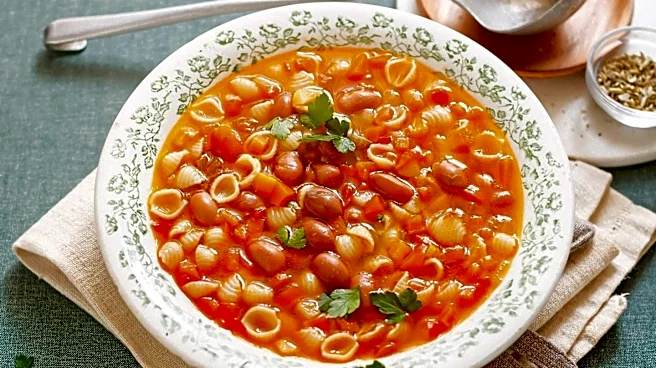
A recipe for Pasta e Fagioli has been shared, emphasizing its health benefits, particularly its rich content of prebiotics and fiber. The dish, inspired by Italian canteen food, includes ingredients like cannellini beans, garlic, onions, and potatoes
(skin on), all noted for their contributions to a healthy microbiome. The recipe details the preparation process, starting with chopping garlic to activate its compounds, then sautéing it with celery, onions, and herbs in extra virgin olive oil. The dish also incorporates parmesan rind and grated parmesan for flavor. The author highlights that while the dish was initially enjoyed for its taste, its nutritional value, especially for gut health, became apparent later. The recipe suggests cooking pasta separately to prevent it from becoming mushy when stored as leftovers, and advises adjusting seasoning to taste.
Why It's Important?
This recipe underscores the growing awareness and importance of dietary choices in promoting gut health. By highlighting ingredients like beans, garlic, and onions as sources of prebiotics, it educates consumers on how common foods can contribute to a healthy microbiome. This is significant as gut health is increasingly linked to overall well-being, including immune function, mental health, and chronic disease prevention. For the food industry, this trend suggests a continued demand for products that are not only tasty but also offer functional health benefits. Consumers are becoming more discerning about the nutritional content of their meals, moving beyond basic calorie counting to understanding the specific roles of components like fiber and prebiotics. This focus on accessible, whole-food ingredients also promotes a more sustainable and natural approach to health.
What's Next?
The continued sharing of recipes that emphasize functional ingredients like prebiotics is likely to further integrate gut-healthy eating into mainstream dietary practices. We can expect to see more home cooks experimenting with traditional dishes, adapting them to maximize nutritional benefits. Food bloggers and health influencers will likely continue to promote similar content, driving interest in ingredients known for their prebiotic and probiotic properties. This trend could also influence food manufacturers to develop more products that naturally incorporate these beneficial components, or to clearly label existing products that are rich in them. Additionally, as public awareness grows, there may be an increased demand for scientific research into the specific health impacts of various prebiotics and their optimal dietary inclusion.
Beyond the Headlines
The emphasis on prebiotics in a traditional dish like Pasta e Fagioli reflects a broader cultural shift towards viewing food as medicine and preventative health. It moves beyond the simplistic 'good' or 'bad' food dichotomy, encouraging a deeper understanding of how specific food components interact with the body. This approach can empower individuals to make more informed dietary choices without resorting to restrictive diets or expensive supplements. Furthermore, it highlights the inherent nutritional wisdom often found in traditional cuisines, which frequently utilize whole, unprocessed ingredients rich in beneficial compounds. This trend could also foster a greater appreciation for culinary heritage, demonstrating that healthy eating can be both delicious and deeply rooted in cultural practices, rather than solely a modern scientific pursuit.