




What's Happening?
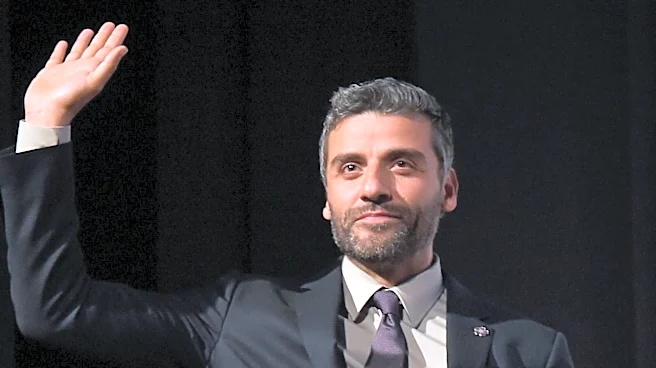
Oscar Isaac was initially attached to the film 'Wild Horse Nine,' a spy thriller set in 1973 Chile, before casting changes led to John Malkovich, Sam Rockwell, and Steve Buscemi taking on the central roles. The movie, which follows CIA agents Chris and Lee
on a mission from Santiago to Easter Island, experienced significant casting shifts during its production. Mark Ruffalo was also attached at one point before Buscemi joined the cast. The final lineup, featuring Malkovich as Chris, Rockwell as Lee, and Buscemi as MJ, ultimately created a strong ensemble with notable chemistry, despite the initial changes.
Why It's Important?
Casting changes in major film productions, especially involving prominent actors like Oscar Isaac, can significantly influence a film's development, marketing, and eventual reception. While Isaac's departure from 'Wild Horse Nine' led to a different ensemble, the final cast is noted for its strong performances and dialogue-driven narrative. This highlights how the dynamic nature of film production can lead to unexpected but successful outcomes. The film's focus on character interaction and dialogue, rather than high-octane action, suggests that the strength of the performances, regardless of initial casting, was paramount to its artistic vision and critical reception.
What's Next?
The film 'Wild Horse Nine' has been released and is being reviewed, with its current cast receiving praise for their performances. The initial casting considerations, including Oscar Isaac's attachment, are now part of the film's production history. Future projects involving the actors who were initially considered, or those who ultimately starred, will continue to be shaped by their availability and the creative direction of new productions. The success of 'Wild Horse Nine' with its current cast may also influence future casting decisions for similar character-driven thrillers.
Beyond the Headlines
The fluidity of casting in Hollywood, as exemplified by 'Wild Horse Nine,' reflects the complex interplay of scheduling, creative vision, and actor availability in film production. While Oscar Isaac's initial attachment did not materialize, the eventual ensemble demonstrates that a film's success can often hinge on the chemistry and talent of its final cast, rather than just the initial star power. This process also underscores the collaborative and often unpredictable nature of filmmaking, where creative decisions and logistical challenges can lead to significant shifts in a project's trajectory, ultimately shaping the final artistic product.