
What's Happening?
The New England Patriots' 2026 rookie class has experienced a mixed performance through the first 10 weeks of the season, contributing to the team's ups and downs. Unlike the previous year's rookie group, which produced immediate starters, this class has not
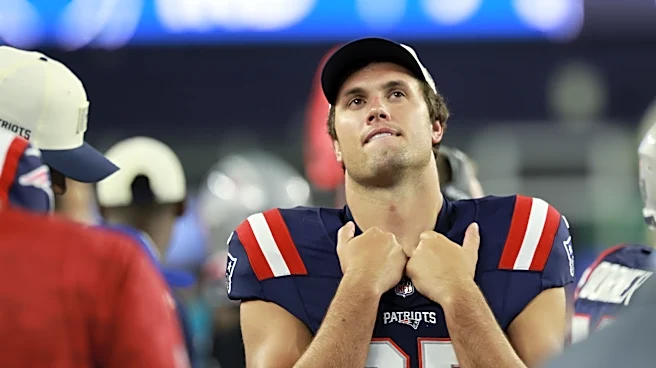
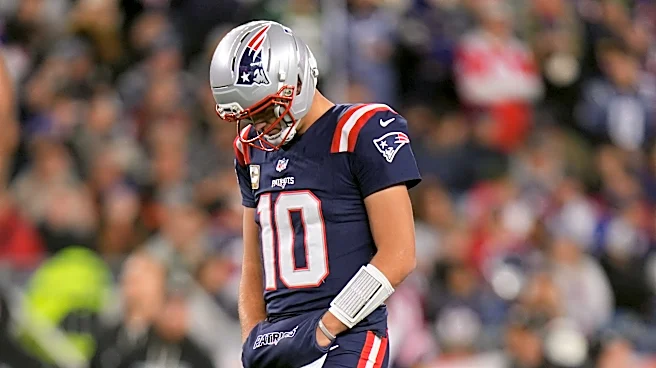
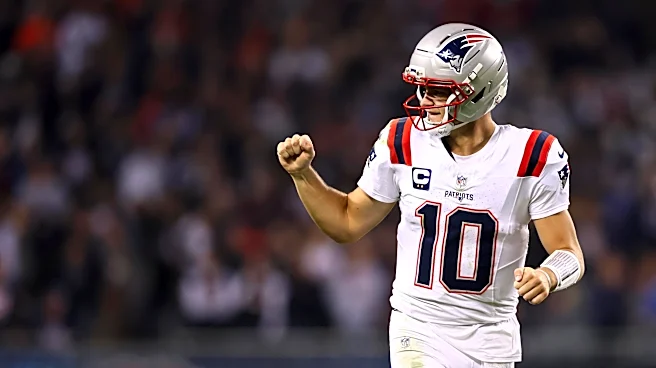
had the same transformative impact. Offensive Tackle Caleb Lomu, a first-round pick, has primarily served as a backup due to Will Campbell and Morgan Moses holding the starting tackle positions, though he is expected to take over as right tackle next offseason. Edge rusher Gabe Jacas, a second-round pick, initially struggled but has shown significant improvement, registering 28 quarterback pressures and 3.5 sacks. Tight End Eli Raridon, a third-round selection, has demonstrated promise as a pass-catcher, accumulating 17 receptions for 231 yards and two touchdowns. Other draft picks like CB Karon Prunty and LB Namdi Obiazor have carved out roles on special teams, while QB Behren Morton is projected to move up the depth chart due to an injury to Drake Maye. Several undrafted free agents and late additions have also contributed, primarily on special teams.
Why It's Important?
The performance of the New England Patriots' rookie class is crucial for the team's long-term strategy and immediate competitiveness. A strong rookie class can provide cost-effective talent, depth, and future starters, which is vital for sustained success in the NFL. The mixed results of this year's class indicate that while some players are developing as expected, others are taking longer to integrate or have faced injury setbacks. The reliance on backups and special teams contributions from several rookies highlights the team's need for immediate impact players, especially in key positions. The potential for Caleb Lomu to become a starting right tackle next season and Gabe Jacas's emergence as a strong defensive presence are significant for the team's future offensive line stability and pass-rushing capabilities. The development of these young players will directly influence the Patriots' roster construction, salary cap management, and overall team performance in the coming seasons.
What's Next?
As the New England Patriots move past their bye week, the focus will be on the continued development and integration of their rookie class. Caleb Lomu is anticipated to transition into a starting role at right tackle as early as the upcoming offseason, which will be a key storyline to watch. The team will also monitor the increasing role of Eli Raridon in two-tight end sets and his overall development as a pass-catcher. With Drake Maye's injury, Behren Morton's potential elevation to QB2 behind Tommy DeVito could provide him with opportunities to see game action, offering a glimpse into his capabilities. The special teams contributions from players like Karon Prunty, Namdi Obiazor, and Erick Hunter will remain important for overall team success. The Patriots will need to assess the progress of all their rookies to determine their roles in future seasons and make informed decisions regarding roster adjustments and potential free-agent acquisitions.
Beyond the Headlines
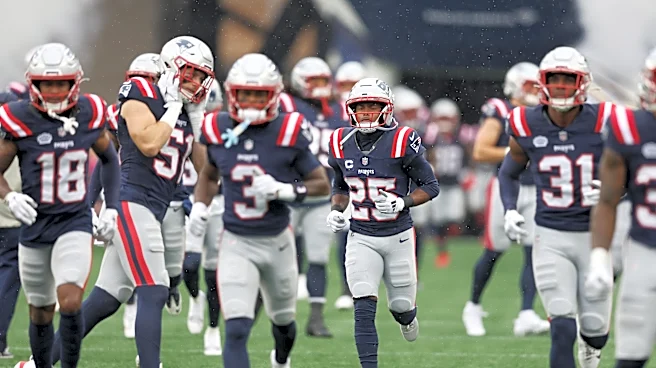
The varying success of the Patriots' 2026 rookie class underscores the inherent challenges and unpredictability of player development in professional sports. The contrast with the previous year's class, which yielded immediate starters, highlights that even with strategic draft picks and coaching, the transition from college to the NFL is not uniform. This situation can influence team morale, coaching strategies, and fan expectations. The emphasis on special teams for many of the later-round picks and undrafted free agents reflects a common NFL strategy to find value and roster spots for players who may not immediately contribute as starters. The long-term implications extend to the team's organizational philosophy regarding player scouting, drafting, and development, as the success or failure of these young players will shape the team's competitive window and financial flexibility for years to come. It also raises questions about the balance between immediate impact and long-term potential in draft selections.