





What's Happening?
The Frick Collection has reopened its Fifth Avenue mansion, marking its return to the historic location after a multi-year renovation. This comprehensive upgrade, the most extensive in ninety years, was led by starchitect Annabelle Selldorf. The renovation focused
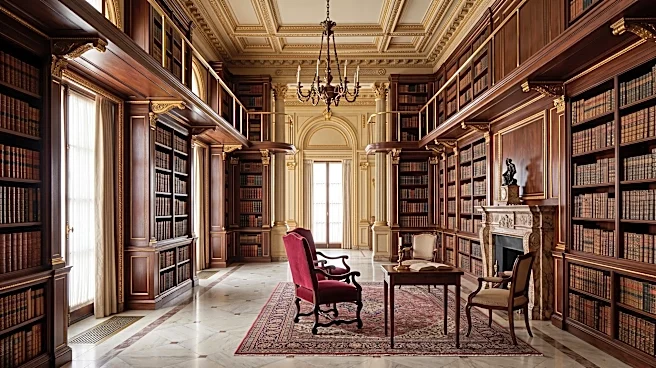
on restoring the historic interiors, enhancing accessibility, and introducing new spaces for exhibitions. The reopening was celebrated with the Frick Autumn Dinner, where Selldorf was honored for her significant contributions to the restoration project. Attendees at the dinner, including chief curator Aimee Ng, Axel Rüger, and fashion designer Bach Mai, dined among masterpieces by artists such as Vermeer, Rembrandt, and Turner. The Library Room, housing Gainsborough paintings and a portrait of Henry Clay Frick, was a notable setting for the event.
Why It's Important?
The reopening of the Frick Collection's Fifth Avenue mansion is a significant cultural event for New York City and the broader U.S. art community. The extensive renovation ensures the preservation of a vital historical landmark and its invaluable art collection for future generations. By improving accessibility and adding new exhibition spaces, the museum can now cater to a wider audience, fostering greater engagement with art and history. This project also highlights the importance of architectural preservation and adaptive reuse in urban environments, demonstrating how historic buildings can be modernized while retaining their original character. The investment in such a renovation underscores the enduring value placed on cultural institutions and their role in enriching public life, potentially influencing other museums and historical sites to undertake similar preservation efforts.
Beyond the Headlines
The meticulous restoration of the Frick Collection's mansion by Annabelle Selldorf goes beyond mere structural repair; it represents a commitment to maintaining the integrity of a unique cultural experience. The integration of modern accessibility features within a historic framework showcases a thoughtful approach to balancing tradition with contemporary needs. This project could serve as a model for other institutions grappling with similar challenges, emphasizing that historical preservation does not preclude progress. The recognition of Selldorf's work with an 'art Oscar' highlights the critical role of architects and conservators in safeguarding cultural heritage. Furthermore, the event itself, bringing together prominent figures from the art and fashion worlds, reinforces the interconnectedness of these cultural spheres and their collective influence on public discourse and appreciation for the arts.