


What's Happening?
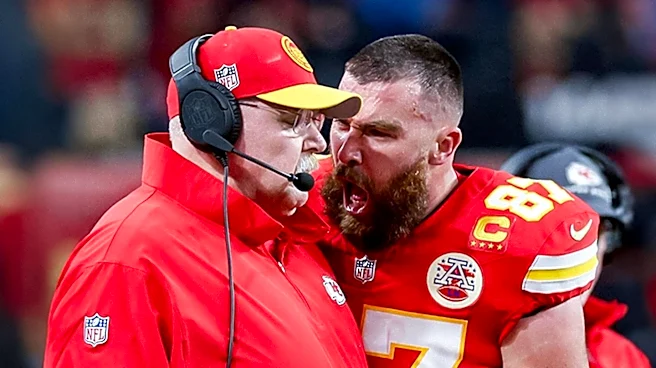
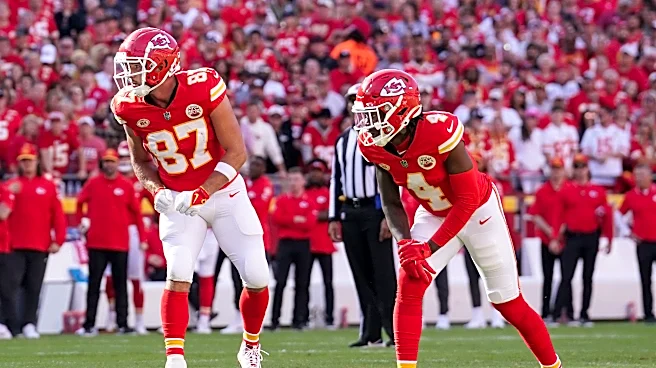
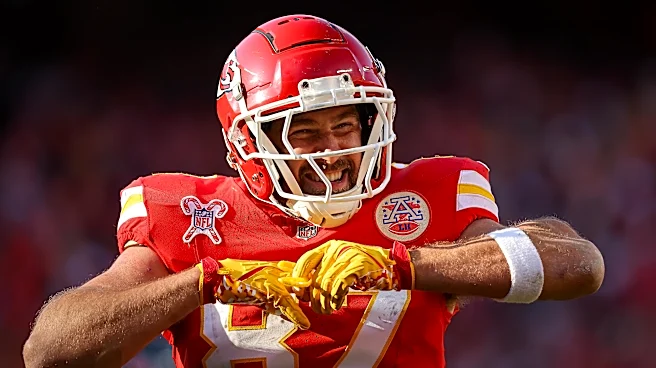
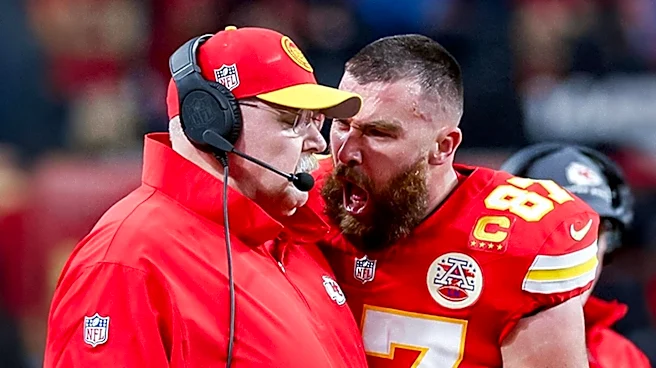
Kansas City Chiefs tight end Travis Kelce has publicly admitted his personal contribution to the team's ongoing problem with penalties. Speaking on the 'New Heights' podcast, Kelce stated that he has committed procedural penalties in three consecutive
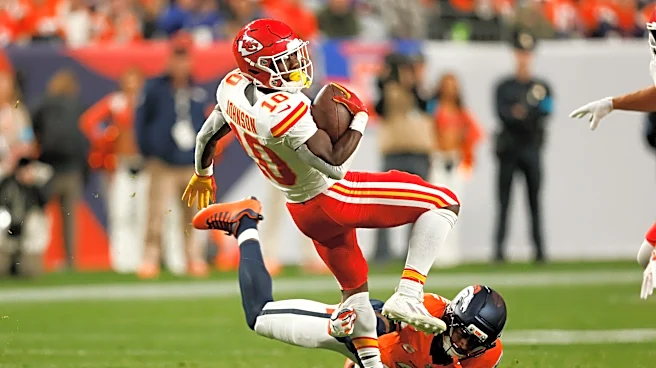
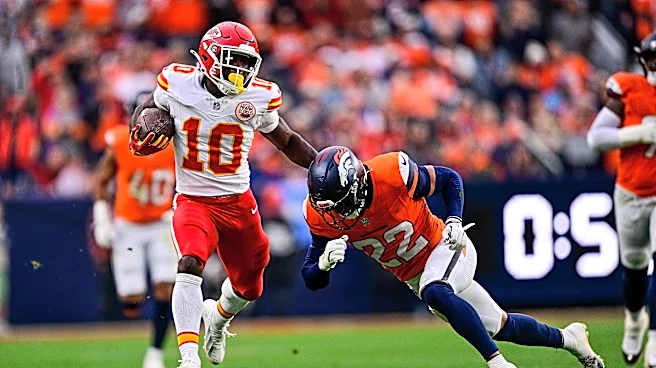
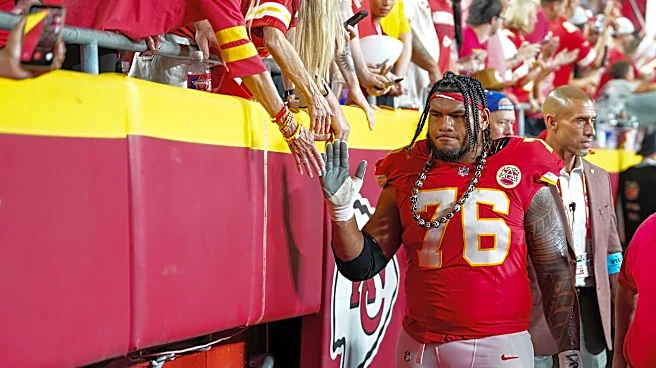
weeks, which has placed the Chiefs' offense in challenging situations. This admission comes after the Chiefs' 28-24 loss to the Denver Broncos, where an 11-point fourth-quarter lead was lost, partly due to costly penalties. One such penalty, a false start by right tackle Jaylon Moore, nullified a potential go-ahead touchdown. Kelce emphasized that penalties are detrimental in the NFL and that the Chiefs are currently hindering themselves in this aspect. While defending his teammate, Kelce also highlighted the offense's failure to execute in the running game near the goal line, indicating that the loss was not solely due to one flag but a broader issue of missed opportunities and execution failures.
Why It's Important?
Kelce's public acknowledgment of his role in the Chiefs' penalty issues is significant because it highlights a critical operational problem for one of the NFL's top teams. Recurring penalties can disrupt offensive rhythm, negate big plays, and ultimately cost games, as demonstrated in the loss to the Broncos. For a team with Super Bowl aspirations, these self-inflicted wounds are a major concern. Kelce's leadership in taking responsibility could set a precedent for other players to address their own mistakes, potentially fostering a culture of accountability necessary for improvement. If the Chiefs can effectively reduce their penalty count, it would significantly enhance their offensive efficiency and overall competitiveness, directly impacting their chances of success in the highly competitive AFC. Conversely, a failure to rectify these issues could undermine their season, affecting fan morale and potentially the team's financial performance through reduced playoff revenue.
What's Next?
The immediate next step for the Kansas City Chiefs is to address and rectify their penalty issues before their upcoming game against the New York Jets. Kelce expressed confidence that the team possesses the necessary personnel and coaching staff to correct these problems. The focus will be on translating this acknowledgment into tangible improvements on the field. Coaches will likely emphasize discipline and precision in practice, aiming to minimize procedural errors and other infractions. The team's performance in the next few games, particularly regarding penalty statistics, will be a key indicator of whether Kelce's call for accountability has translated into effective change. Stakeholders, including fans and analysts, will be closely watching to see if the Chiefs can clean up their play and avoid handing opponents opportunities through avoidable mistakes.
Beyond the Headlines
Beyond the immediate impact on game outcomes, Kelce's candid admission touches upon broader themes of leadership and accountability within professional sports. In an era where athletes often face intense public scrutiny, a star player openly taking responsibility for his errors can foster greater trust and respect from fans and teammates alike. This level of self-awareness and willingness to address personal shortcomings publicly can serve as a powerful example, not just for the Chiefs but for other professional sports organizations. It underscores the idea that even elite athletes must continuously evaluate and improve their performance, highlighting the constant pressure for perfection in high-stakes environments. The long-term implication could be a strengthened team culture where individual accountability contributes to collective success, potentially influencing how other teams approach internal performance issues.