






What's Happening?
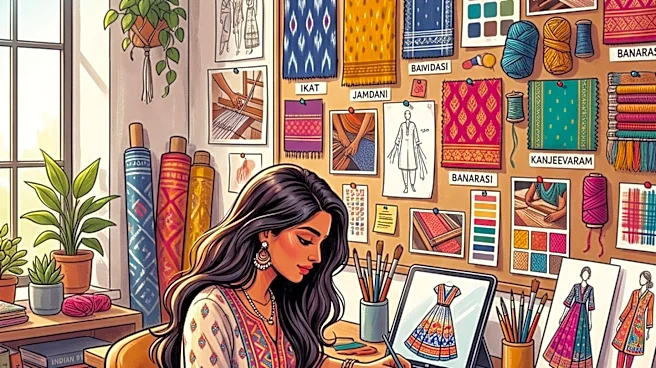
Fashion design colleges in India are increasingly incorporating artificial intelligence (AI) and digital technologies into their curricula to prepare students for the evolving industry. Institutions like Vogue Institute of Art and Design (VIAD) in Bangalore
are offering undergraduate and postgraduate programs that integrate AI, computer-aided design (CAD), digital illustration, 3D garment visualization, and virtual prototyping. This shift aims to equip aspiring designers with skills relevant to modern design workflows, moving beyond traditional techniques. The curriculum now emphasizes practical training, industry exposure, and portfolio development, alongside technological advancements. This integration reflects a broader trend in the fashion industry where digital tools are becoming crucial for trend prediction, creative concept generation, and efficient garment development.
Why It's Important?
The integration of AI and digital technologies in fashion education in India signifies a critical adaptation to global industry trends. For U.S. fashion businesses and designers, this development means a growing pool of internationally trained talent proficient in advanced digital tools. This could lead to increased collaboration opportunities, outsourcing of design and development tasks, and a more competitive global market for fashion innovation. U.S. educational institutions might also look to these models for curriculum enhancement to ensure their graduates remain competitive. The emphasis on technology-driven design can accelerate product development cycles and foster more sustainable practices through virtual prototyping, impacting the entire supply chain from concept to consumer.
What's Next?
The continued integration of AI and digital tools in fashion education is expected to lead to a new generation of designers who are not only creatively skilled but also technologically adept. This could drive further innovation in areas like virtual fashion, digital garment development, and personalized design. We may see more international partnerships between educational institutions and fashion companies to foster this talent. The U.S. fashion industry will likely need to adapt by investing more in digital infrastructure and training for its workforce to keep pace with these global advancements. Furthermore, the rise of AI-powered design could influence consumer expectations, pushing for more customized and digitally interactive fashion experiences.
Beyond the Headlines
This technological shift in fashion education has deeper implications beyond just design skills. It raises questions about the future of traditional craftsmanship versus digital artistry, and the ethical considerations of AI-generated designs. The accessibility of these advanced tools could democratize fashion design, allowing more individuals to create and produce collections without extensive physical resources. However, it also poses challenges regarding intellectual property in a world of AI-assisted creation. Culturally, the blend of India's rich textile heritage with cutting-edge technology could lead to unique aesthetic movements and design philosophies, influencing global fashion trends and potentially challenging established Western design paradigms.