




What's Happening?
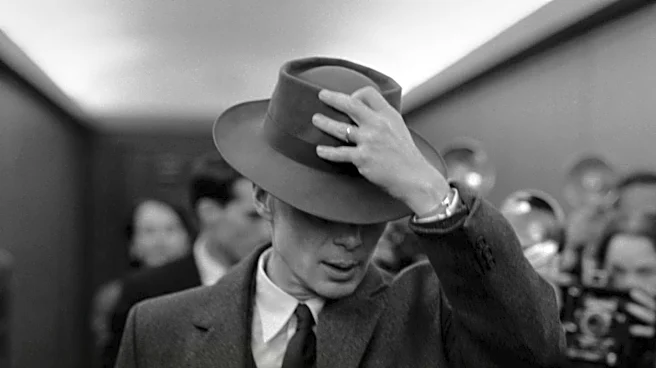
Cillian Murphy, the acclaimed actor known for his roles in 'Peaky Blinders' and 'Oppenheimer,' recently reflected on a decision he made in 2011 that he still regrets. While performing in Enda Walsh’s one-man show 'Misterman' in Brooklyn, New York, Murphy learned
that veteran actor John Hurt was performing Samuel Beckett’s 'Krapp’s Last Tape' at the Brooklyn Academy of Music concurrently. After attending Hurt's performance, which he found 'unbelievable,' Murphy was offered the chance to go backstage and meet Hurt. However, considering how fatigued he felt after his own demanding one-man show, Murphy speculated that Hurt might also be tired and opted not to meet him, thinking he would be imposing. This decision, made out of what he perceived as consideration, has since become a source of regret for Murphy, who considers Hurt one of his acting heroes. Hurt passed away six years later, meaning Murphy never had another opportunity to meet him.
Why It's Important?
This anecdote from Cillian Murphy highlights the personal reflections of a prominent figure in the entertainment industry, offering insight into the human element behind celebrity. It underscores the common experience of regret over missed opportunities, particularly when those opportunities involve connecting with admired individuals. For fans and aspiring actors, Murphy's story serves as a reminder of the transient nature of such chances and the importance of seizing moments. It also subtly touches upon the demanding nature of live theater, where performers often push their physical and mental limits, influencing their decisions even outside of their performances. The story resonates beyond the entertainment sphere by illustrating a universal human dilemma: the balance between empathy, self-preservation, and the pursuit of personal aspirations or connections.
What's Next?
While this particular reflection from Cillian Murphy is about a past event, it contributes to his public persona and narrative as an actor who values authenticity and human connection. Such personal revelations often endear public figures to their audience, fostering a deeper understanding of their character beyond their on-screen roles. For Murphy, this reflection might influence his future interactions, potentially making him more inclined to seize opportunities for connection. For the broader entertainment industry, such stories can spark discussions about the pressures faced by performers and the importance of valuing interactions within the community. There are no direct foreseeable consequences or scheduled decisions stemming from this specific reflection, but it adds a layer to the ongoing public perception and appreciation of Cillian Murphy's career and personality.
Beyond the Headlines
Murphy's regret over not meeting John Hurt delves into deeper psychological and ethical dimensions. It illustrates the 'what if' scenarios that often haunt individuals, particularly when a missed opportunity involves someone deeply admired or respected. The decision was rooted in empathy—Murphy's assumption that Hurt would prefer solitude over a post-performance interaction—yet it led to personal regret. This highlights the complexities of social interactions and the potential for misjudgment, even when intentions are good. It also touches upon the broader theme of mortality and the finality of missed chances, especially when the admired individual is no longer alive. The story serves as a poignant reminder of the value of direct communication and the potential pitfalls of overthinking social cues, suggesting that sometimes, the simplest action—like going backstage—can prevent long-lasting regret.