






What's Happening?
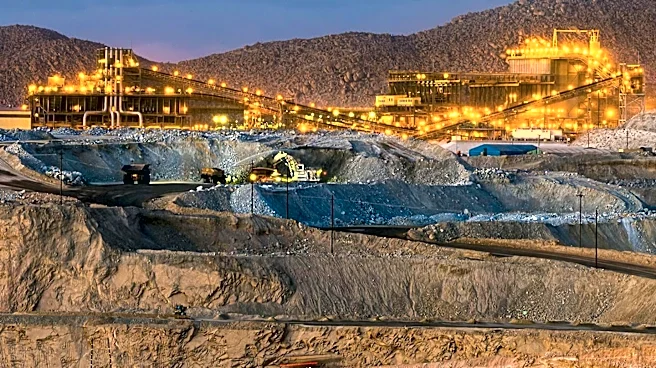
EPA Administrator Lee Zeldin was present on October 6 to celebrate the start of commercial production at Trekor Metals' (formerly Taseko Mines) Florence Copper project in Arizona. This mine is notable for its innovative in-situ recovery method, which
extracts copper without traditional open-pit or shaft mining. The process involves drilling approximately 145 wells, pushing a weak acid solution through broken rock up to 1,200 feet deep to dissolve copper, and then pumping the copper-laden liquid back to the surface. Trekor Metals claims this is the world's first greenfield site to commercially recover copper using this method. Administrator Zeldin highlighted that the U.S. had not opened a new copper source in nearly 20 years, underscoring the significance of this project for domestic mineral production.
Why It's Important?
The Florence Copper project, endorsed by EPA Administrator Lee Zeldin, represents a significant advancement in U.S. mining technology and resource independence. The in-situ recovery method offers a less environmentally disruptive alternative to conventional mining, potentially reducing land disturbance and waste generation. This could set a new standard for sustainable mining practices in the U.S. and globally. For the U.S. economy, the new copper source contributes to domestic supply chains, reducing reliance on foreign imports for a critical industrial metal. Copper is essential for various sectors, including electronics, construction, and renewable energy technologies. The project's success could encourage further investment in similar innovative mining techniques, bolstering U.S. mineral security and creating jobs in the mining sector, particularly in regions like Arizona.
What's Next?
Trekor Metals aims for the Florence Copper project to reach its full design capacity of 85 million pounds of cathode copper per year by early 2027. The company is currently focused on expanding its wellfield, with six rigs continuously drilling to bring more wells online and catch up to the plant's processing capacity. The mine has an estimated life of 22 years based on its current deposit. Continued monitoring of the in-situ recovery process, particularly regarding the containment of the acidic solution, will be crucial to ensure environmental safety and public confidence. The success of this project could pave the way for the adoption of similar mining technologies for other minerals, potentially transforming the U.S. mining industry and its environmental footprint.
Beyond the Headlines
The Florence Copper project, with its innovative in-situ recovery method, raises important questions about the future of resource extraction and environmental stewardship. While presented as a 'neighborly' approach to mining due to its reduced surface impact, the use of weak acid underground necessitates rigorous oversight to prevent groundwater contamination. The project highlights the ongoing tension between the demand for critical minerals and the imperative to protect natural resources. Its success could influence regulatory frameworks for mining, potentially leading to new guidelines for in-situ recovery operations. Furthermore, the project's ability to provide a domestic source of copper could have geopolitical implications, strengthening U.S. economic resilience and reducing vulnerability to global supply chain disruptions, particularly in the context of increasing demand for materials vital to green technologies.