






What's Happening?
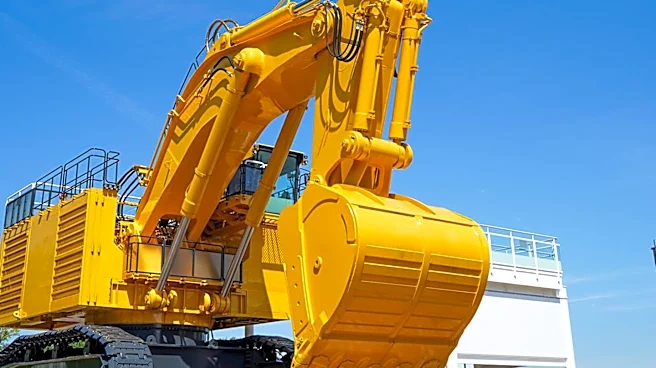
Industrial remote control hydraulic excavator kits and unmanned systems are revolutionizing safety and productivity in hazardous environments. These systems allow operators to control excavators remotely, removing them from dangerous situations such as
unstable slopes, explosive zones, and contaminated areas. The technology ranges from simple wireless control kits to fully autonomous systems that use sensors and AI to perform tasks without continuous operator input. The choice between retrofit kits and purpose-built unmanned systems depends on the specific hazard profile of the application. These systems are being used in various industries, including demolition, mining, and nuclear decommissioning, where they provide significant safety benefits by keeping operators out of harm's way.
Why It's Important?
The adoption of remote control and unmanned excavator systems is a major advancement in industrial safety, reducing the risk of injury or death for operators working in hazardous conditions. By allowing machines to be controlled from a safe distance, these systems enhance operational efficiency and enable continuous work in environments that would otherwise be too dangerous for human presence. This technology is particularly valuable in industries such as mining and nuclear decommissioning, where the risks are high and the need for precision and safety is paramount. The ability to retrofit existing machinery with remote control capabilities also offers a cost-effective solution for companies looking to improve safety without investing in entirely new equipment.
Beyond the Headlines
The implementation of remote control excavator systems raises important considerations regarding regulatory compliance and operator training. Ensuring that these systems meet safety standards and are operated by trained personnel is crucial to maximizing their benefits. Additionally, the technology's impact on labor markets and job roles in industries reliant on manual excavation work could be significant, as automation and remote operation become more prevalent. Companies must balance the advantages of increased safety and efficiency with the potential implications for workforce dynamics.