





What's Happening?
Crown Prince Mohammed bin Salman bin Abdulaziz Al Saud, Prime Minister and Chairman of the Council of Economic and Development Affairs, has affirmed that the 2027 state budget embodies the Saudi government's commitment to prioritizing national advancement
and citizen interests. The budget aims to preserve development gains for current and future generations, building on the directives of King Salman bin Abdulaziz Al Saud and the efforts of the Saudi people. The Crown Prince stated that the third phase of Saudi Vision 2030 will maximize its impact on people's lives and transform its gains into a sustainable force for the economy, creating renewed opportunities. The budget is designed within a long-term fiscal planning framework that balances sustainable growth, development priorities, and fiscal sustainability, while maintaining flexibility in resource allocation. Key priorities include enhancing social support systems, improving living standards, and investing in infrastructure and basic services. Economic reforms have broadened the economic base, with non-oil activities projected to grow by 2.5% in 2026.
Why It's Important?
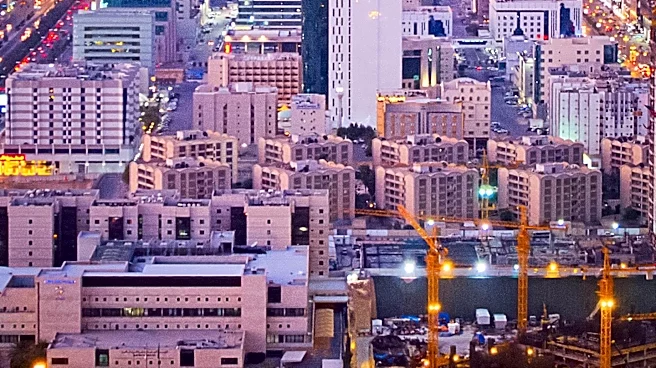
This budget is a critical component of Saudi Arabia's Vision 2030, signaling a continued push towards economic diversification and reduced reliance on oil revenues. By prioritizing citizen interests and national advancement, the government aims to foster social stability and improve the quality of life for its population. The focus on sustainable growth and fiscal responsibility is essential for long-term economic resilience, especially in a volatile global economic environment. Investments in infrastructure, transport, and logistics are designed to enhance the Kingdom's connectivity and attractiveness for investment, which could have significant implications for global trade routes and supply chains. The growth in non-oil activities and the support for the private sector indicate a strategic effort to create a more dynamic and competitive economy, generating new job opportunities and fostering a more diversified economic landscape. This approach aims to ensure the Kingdom's ability to adapt to global changes and maintain its financial strength.
What's Next?
The government will continue to focus on increasing spending efficiency and measuring outcomes, linking resource allocation to national strategies, and maximizing the benefit from government assets and investments. Government entities are tasked with effective monitoring, implementation, and transparency to achieve targeted project outcomes. The financial sector will continue to grow under robust regulatory frameworks to support economic financing and private sector expansion. The Public Investment Fund and the National Development Fund will play crucial roles in developing strategic sectors, strengthening partnerships with the private sector, and increasing financing opportunities for development projects. Internationally, Saudi Arabia will maintain its role as a reliable global energy supplier, expand economic partnerships, and contribute to regional and global development and stability, while closely monitoring geopolitical developments and global economic uncertainty.
Beyond the Headlines
The Crown Prince's statements underscore a broader strategic vision for Saudi Arabia that extends beyond mere economic figures. The emphasis on 'nation's elevation' and 'citizen's interest' suggests a holistic approach to national development that includes social welfare, human capital development, and national security. The resilience of the Saudi economy in the face of geopolitical developments highlights the effectiveness of its flexible fiscal policies and coordinated efforts. This long-term planning, extending beyond 2030, indicates a sustained commitment to fundamental reforms that aim to transform Saudi Arabia into a global economic powerhouse with a diversified and sustainable economy. The ongoing development of military and defense capabilities, alongside economic reforms, reflects a comprehensive strategy to safeguard national interests and ensure stability in a complex regional and global landscape.