





What's Happening?
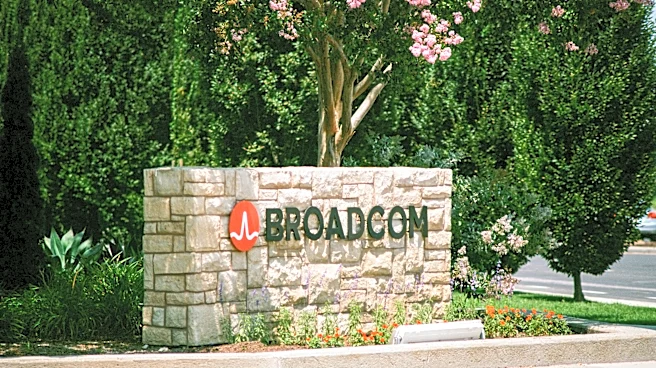
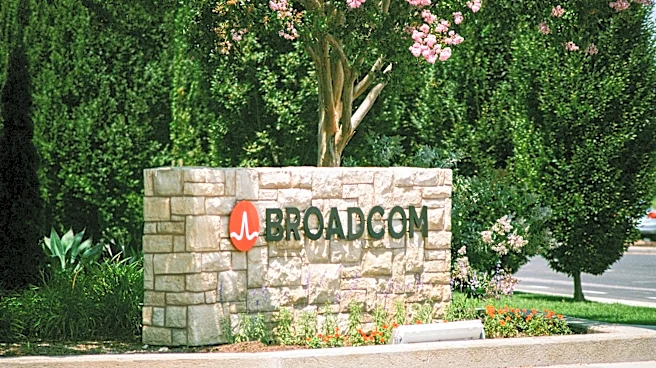
Broadcom has completed a significant real estate transaction, purchasing its Irvine research-and-development campus for $325 million. This acquisition is a key indicator of a growing trend in Orange County, California, where companies are expanding their
physical footprints through mega-campus developments. Another prominent example is Anduril Industries, which is also increasing its presence in Costa Mesa and Santa Ana. This movement towards large, integrated campuses suggests a strategic shift by major corporations to consolidate operations and foster innovation within dedicated, expansive facilities. The Orange County office market is defying the broader narrative of empty office towers, with these major players investing heavily in physical infrastructure.
Why It's Important?
Broadcom's substantial investment in its Irvine campus, alongside Anduril's expansion, signals a robust and dynamic commercial real estate market in Orange County, particularly for technology and R&D-focused companies. This trend is significant for the U.S. economy as it indicates continued confidence in physical workspaces for innovation and collaboration, especially in high-tech sectors. The creation of mega-campuses can lead to job growth, increased local economic activity, and the development of specialized talent pools. For the broader U.S. business landscape, this localized boom challenges the narrative of a universal shift to remote work and highlights the strategic value some companies place on integrated, large-scale physical environments for their operations. It also suggests that certain regions, like Orange County, are becoming hubs for specific industries, attracting significant capital investment and talent.
What's Next?
The continued investment in mega-campuses by companies like Broadcom and Anduril is likely to spur further development and competition for talent and resources in Orange County. This could lead to increased demand for commercial real estate, potentially driving up property values and rental rates in the region. Other companies in the technology and defense sectors might follow suit, seeking to establish or expand their presence in this burgeoning hub. Local governments and urban planners will need to address the implications of this growth, including infrastructure development, housing, and transportation. The success of these mega-campuses could also serve as a model for other regions in the U.S. looking to attract and retain high-tech industries, emphasizing the importance of integrated work environments for fostering innovation.
Beyond the Headlines
The rise of mega-campuses in Orange County reflects a deeper strategic re-evaluation by corporations regarding the optimal work environment in a post-pandemic world. While remote work gained prominence, these investments suggest that for certain industries, particularly those heavily reliant on collaborative R&D and complex project execution, a centralized physical hub remains critical. This could lead to a bifurcation in corporate real estate strategies, where some companies embrace fully remote or hybrid models, while others invest heavily in state-of-the-art, integrated campuses. The ethical implications include potential impacts on local communities, such as gentrification and increased cost of living, as well as the environmental footprint of large-scale developments. Culturally, these campuses could foster unique corporate identities and innovation ecosystems, potentially influencing regional economic and social dynamics for decades to come.