






What's Happening?
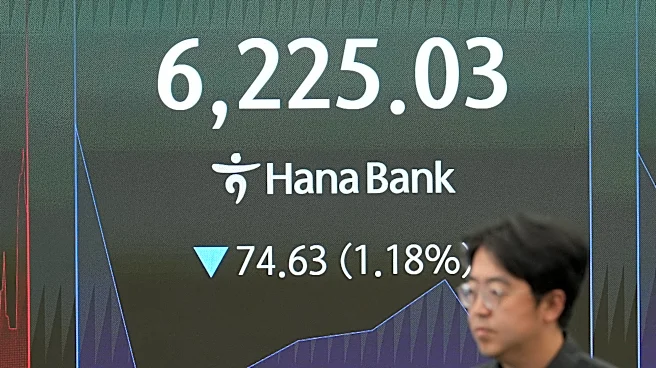
Wall Street experienced a downturn as major stock indexes fell due to rising oil prices and diminishing hopes for a U.S.-Iran deal regarding the Strait of Hormuz. The Dow Jones Industrial Average decreased by 0.1%, the S&P 500 lost less than 0.1%, and the Nasdaq
dropped by 0.3%. This decline follows a record close for the S&P 500 on Friday, which was influenced by U.S. job losses in July. The uncertainty surrounding the U.S.-Iran negotiations has contributed to investor concerns, impacting the stock market's performance. Additionally, tech stocks, including Nvidia, faced significant losses, further affecting the market.
Why It's Important?
The decline in Wall Street indexes highlights the sensitivity of financial markets to geopolitical tensions and energy prices. Rising oil prices can lead to increased costs for businesses and consumers, potentially slowing economic growth. The uncertainty over the U.S.-Iran deal adds to market volatility, as investors are wary of potential disruptions in oil supply through the Strait of Hormuz, a critical chokepoint for global oil shipments. The performance of tech stocks, such as Nvidia, is also crucial as they are significant drivers of market trends. The current situation underscores the interconnectedness of global events and their impact on U.S. economic stability.
What's Next?
Investors will likely continue to monitor developments in the U.S.-Iran negotiations closely, as any progress or setbacks could significantly influence market dynamics. Additionally, upcoming economic indicators, such as inflation data, may provide further insights into the health of the U.S. economy and guide investor decisions. Companies affected by rising oil prices may need to adjust their strategies to mitigate potential cost increases. The tech sector's performance will also be under scrutiny, as it plays a pivotal role in the broader market's trajectory.