




What's Happening?
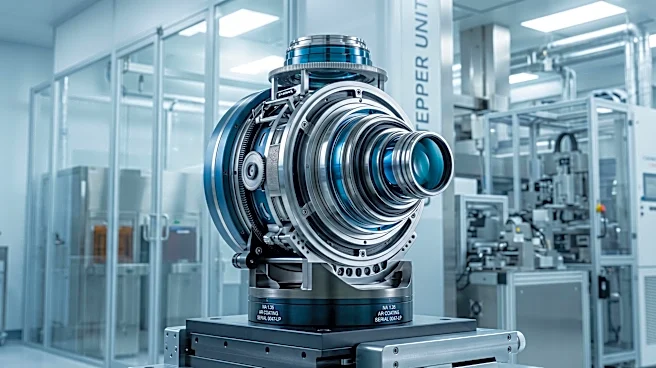
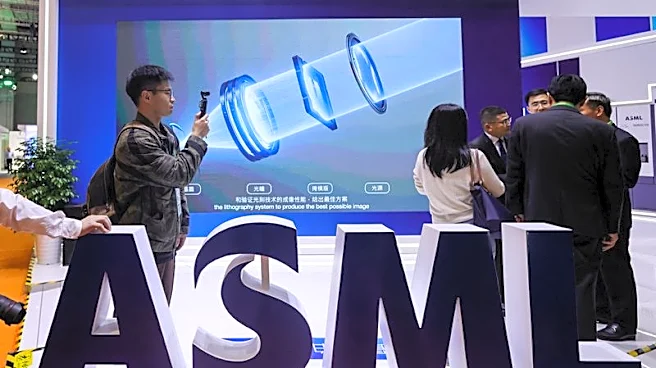
Christophe Fouquet, CEO of ASML, the sole manufacturer of lithography machines essential for producing advanced AI chips, has cautioned against completely severing China's access to Western technology. Speaking on Semafor’s Future Proof, Fouquet argued
that such a strategy would likely backfire, prompting China to intensify its own technological development. He emphasized the necessity of export controls to safeguard advanced technology but stressed that these controls should not entirely frustrate a nation, as this could encourage them to redouble their efforts in domestic innovation. ASML, valued at $520 billion, holds a pivotal position in the ongoing debate in Washington regarding Chinese access to Western technology. Fouquet advocates for a strategy that maintains a 'generation gap' by continuing to sell older equipment to China, which he believes keeps Beijing dependent on Western hardware rather than accelerating its own indigenous chip production capabilities. ASML's current shipments to China are more than a decade behind the cutting edge.
Why It's Important?
This stance from ASML's CEO highlights a critical tension in U.S. technology policy towards China. The U.S. government has been increasingly focused on restricting China's access to advanced semiconductor technology to curb its military and technological ambitions. However, Fouquet's argument suggests that an overly aggressive approach could inadvertently accelerate China's self-sufficiency in chip manufacturing, potentially undermining the long-term effectiveness of export controls. Maintaining a 'generation gap' through controlled sales of older technology could preserve a degree of influence and market share for Western companies like ASML, while a complete cutoff might eliminate that leverage. The debate also underscores the economic implications for U.S. and European chipmakers, who rely on the Chinese market for a significant portion of their revenue. A complete disengagement could lead to substantial financial losses for these companies and potentially impact their ability to fund future research and development.
What's Next?
The debate over the optimal approach to technology export controls with China is expected to continue in Washington. Lawmakers remain divided on how aggressively to tighten curbs, especially following recent discussions surrounding intelligence concerns. ASML's perspective, as a key player in the global semiconductor supply chain, will likely influence policy discussions, though it may not directly alter immediate U.S. government decisions. Future policy adjustments could involve more nuanced export control frameworks that aim to balance national security concerns with economic realities and the potential for unintended consequences. Companies like ASML will continue to navigate these complex geopolitical pressures, potentially adjusting their sales strategies based on evolving regulatory landscapes and market dynamics. The long-term trajectory of China's domestic chip industry will also be a critical factor, as any significant advancements could further shift the dynamics of this technological competition.
Beyond the Headlines
The discussion extends beyond immediate economic and security concerns to broader questions of technological sovereignty and global interdependence. Fouquet's argument touches on the delicate balance between fostering innovation and preventing its weaponization. If China successfully develops its own advanced chip manufacturing capabilities due to being completely cut off, it could fundamentally alter the global technological landscape, reducing Western leverage and creating a more bifurcated tech ecosystem. This scenario could lead to increased competition, potential fragmentation of global technology standards, and a shift in geopolitical power dynamics. Furthermore, the ethical implications of controlling access to foundational technologies, especially those with dual-use potential, will remain a central theme. The long-term impact on global supply chains and the potential for a 'tech cold war' are significant considerations that policymakers must weigh when formulating strategies for technological engagement with China.