

What's Happening?
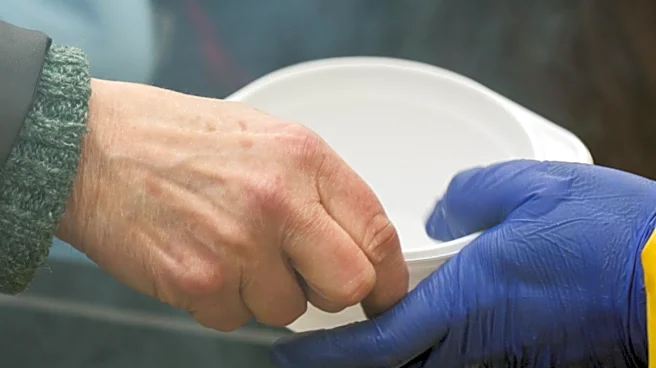
Volunteers in New York City organized their seventh annual 'Thanksgiving Train' event, transforming an L train car into a festive dining area to serve a Thanksgiving feast to subway riders. Led by Christopher Dupree, Daniel Jean, Jodell Lewis, and Dizzy
Brown, the group decorated the subway car and offered hot plates of food, sourced from local restaurants like Datz Deli, Emmanuel Restaurant, and McKenzie’s Kitchen. The event, which took place on the eve of Thanksgiving, aimed to provide a sense of community and ensure that individuals felt included and fed during the holiday. According to Lewis, a comedian known as 'Joe Show,' the initiative began in 2019 with a few individuals cooking and has since expanded to include contributions from local businesses and numerous volunteers. The 'Thanksgiving Train' has become a cherished tradition, surprising out-of-towners and delighting New Yorkers who stumble upon the lively car filled with singing, dancing, and food.
Why It's Important?
This annual 'Thanksgiving Train' event highlights the power of community-led initiatives in addressing social needs and fostering connection, particularly during holidays. In a large, often anonymous city like New York, such efforts provide a vital sense of belonging and support for individuals who might otherwise feel isolated. The involvement of local businesses in sponsoring the food demonstrates a collaborative spirit between community organizers and the private sector, contributing to local economic engagement and social responsibility. The event's growth from a small endeavor to a widely recognized tradition underscores the positive impact that grassroots movements can have on urban life, promoting kindness and solidarity. It also serves as a reminder of the importance of direct, person-to-person aid in supplementing broader social welfare programs, creating immediate and tangible benefits for participants.
What's Next?
The organizers anticipate continuing the 'Thanksgiving Train' tradition in future years, building on its growing popularity and community support. The success of this year's event may inspire other New Yorkers and communities to initiate similar acts of kindness and volunteer efforts, particularly around holidays. The ongoing involvement of local restaurants and businesses is expected to continue, potentially expanding the reach and offerings of the feast. The event's positive reception could also lead to increased media attention, further encouraging participation from volunteers and donations from sponsors. The 'Thanksgiving Train' serves as a model for how simple, community-driven actions can create significant positive impacts, fostering a culture of generosity and mutual support within the city.
Beyond the Headlines
Beyond its immediate impact of providing meals, the 'Thanksgiving Train' touches upon deeper societal themes of urban anonymity versus community, and the role of informal networks in social welfare. In an era where digital interactions often overshadow face-to-face connections, this event emphasizes the enduring value of physical presence and shared experiences in building social cohesion. It challenges the perception of public spaces, like subway cars, as purely utilitarian, transforming them into venues for celebration and human connection. The initiative also subtly critiques the broader societal structures that can leave individuals feeling alone or in need, by demonstrating that collective action can fill these gaps with warmth and generosity. This event is a testament to the resilience of human spirit and the capacity for spontaneous acts of kindness to create meaningful social change.