

What's Happening?
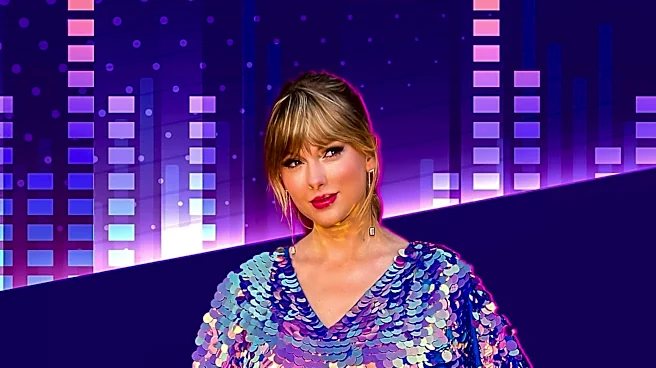
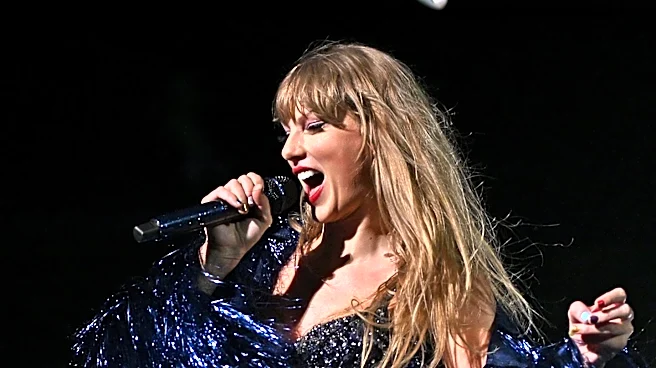
Taylor Swift recently asserted the enduring value of human-made music, stating that human artists are 'still winning' in the creative landscape. During a virtual press conference for Golden Globe voters, where she promoted her song 'I Knew It, I Knew You'
from 'Toy Story 5,' Swift praised albums by Rosalía and Olivia Dean, highlighting their human origins and ability to connect with listeners through shared experiences. While not explicitly mentioning artificial intelligence, her remarks underscored the unique emotional and conceptual depth that human artists bring to music. This statement comes as Swift has taken proactive measures to protect her voice and likeness from potential AI misuse, including filing trademark applications in the U.S., UK, European Union, and Australia to safeguard her spoken phrases and vocal characteristics.
Why It's Important?
Swift's comments are significant as they address a growing concern within the music industry regarding the rise of artificial intelligence in content creation. Her stance champions human artistry and creativity, potentially influencing public perception and industry standards regarding AI-generated music. For artists, her actions set a precedent for protecting intellectual property in an era where AI can replicate voices and styles. This could lead to increased legal and technological efforts to safeguard artists' rights and ensure fair compensation. For consumers, it reinforces the value of authentic human expression in art, potentially shaping preferences for music created by human artists over AI-generated content. The debate over AI's role in creative fields has broad implications for copyright law, ethical considerations in technology, and the future of artistic professions.
What's Next?
The conversation around AI and human creativity in music is expected to intensify, with artists, legal experts, and technology companies continuing to navigate this evolving landscape. Swift's proactive trademark filings may inspire other artists to take similar protective measures, leading to a more robust legal framework for intellectual property in the age of AI. Industry organizations and policymakers may also face increased pressure to develop guidelines and regulations concerning AI's use in music production and distribution. This ongoing dialogue will likely shape future technological advancements in music, influencing how AI tools are developed and integrated, and how human artists adapt to and leverage these innovations while preserving the integrity of their work.
Beyond the Headlines
Beyond the immediate implications for the music industry, Swift's remarks touch upon broader philosophical questions about the nature of art and human experience. Her emphasis on music as a reflection of 'human experience' and its ability to 'uplift and inspire' suggests a deeper cultural value that AI, despite its capabilities, may struggle to replicate. This perspective highlights the unique role of human consciousness, emotion, and lived experience in creating art that resonates deeply with others. The ongoing tension between technological advancement and human creativity raises ethical considerations about authenticity, originality, and the potential for AI to devalue human artistic contributions. This debate extends beyond music to all creative fields, prompting a re-evaluation of what truly constitutes 'art' in an increasingly AI-driven world.