






What's Happening?
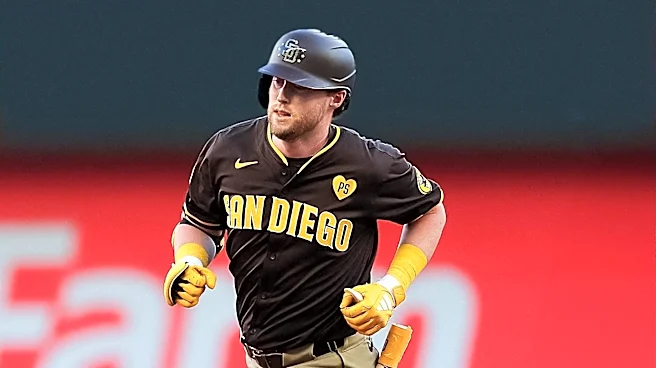
Major League Baseball (MLB) owners have unanimously approved the sale of the San Diego Padres to an investment group led by private equity billionaire José E. Feliciano and his wife, Kwanza Jones. The transaction values the Padres at $3.9 billion, setting
a new MLB record for a franchise sale. This figure surpasses the previous record of $2.4 billion paid by Steve Cohen for the New York Mets in 2020. The new ownership group, with Feliciano serving as the controlling owner, will jointly head the club. An agreement for the sale was reached in May with the family of the late Padres owner Peter Seidler, who, along with his partners, acquired the team for approximately $800 million in 2012. Feliciano, a native of Puerto Rico and co-founder of Clearlake Capital, will become the second Latino controlling owner in MLB, following Los Angeles Angels owner Arte Moreno. The ownership transfer is anticipated to be finalized soon.
Why It's Important?
This record-breaking sale underscores the escalating valuation of professional sports franchises in the U.S., reflecting strong investor confidence in the long-term profitability and cultural significance of MLB teams. The substantial increase in value from the Padres' 2012 purchase price highlights the robust financial health and growth potential perceived within the league. For the San Diego Padres, the new ownership brings a stated ambition to secure the franchise's first World Series championship and build a consistently competitive team. This commitment could lead to increased investment in player talent, facilities, and fan experience, potentially boosting local economic activity and civic pride in San Diego. The entry of José E. Feliciano as a Latino controlling owner also marks a significant step towards greater diversity in MLB ownership, potentially influencing future ownership structures and broadening the league's appeal to diverse fan bases. The Padres' recent on-field success, including four postseason appearances in the last six seasons and a current playoff contention, provides a strong foundation for the new owners to build upon.
What's Next?
The ownership transfer is expected to be finalized shortly, officially ushering in the new era for the San Diego Padres under José E. Feliciano and Kwanza Jones. Following the finalization, the new ownership group is likely to outline their strategic vision for the team, which may include plans for player acquisitions, organizational changes, and community engagement initiatives. Their stated goal of winning a World Series championship and building a perennial contender suggests potential aggressive moves in the free agent market or significant investments in player development. The team's current position in the National League wild-card race means the new owners will immediately oversee a franchise with playoff aspirations, adding immediate pressure and opportunity. Fans and stakeholders will be closely watching for any immediate shifts in team philosophy or operational strategies as the new leadership takes the helm. The record sale price also sets a new benchmark for future MLB franchise valuations, potentially influencing other team sales and investments across the league.
Beyond the Headlines
The record-setting sale of the San Diego Padres reflects a broader trend of private equity and high-net-worth individuals increasingly investing in professional sports. This influx of capital often brings sophisticated business strategies and a focus on maximizing asset value, which can lead to both positive and negative implications for teams and their communities. While increased investment can translate to better on-field performance and enhanced fan experiences, it also raises questions about ticket prices, stadium development, and the potential for teams to be viewed more as financial assets than community institutions. The involvement of private equity firms like Clearlake Capital in sports ownership signifies a growing convergence of traditional finance with the entertainment industry, potentially reshaping how sports franchises are managed and valued. Furthermore, the increasing diversity in ownership, exemplified by Feliciano, could foster more inclusive decision-making and broader representation within the historically homogenous world of professional sports ownership, potentially influencing league-wide initiatives and outreach efforts.