


What's Happening?
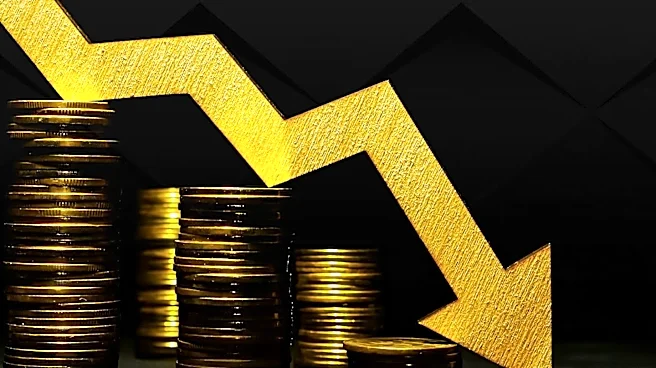
Gold prices opened lower on Friday, November 20, 2026, continuing a downward trend that has brought them to levels last observed in September 2025. The December futures for gold opened at $3,633.80 per troy ounce, marking a 2.6% decrease from Thursday's
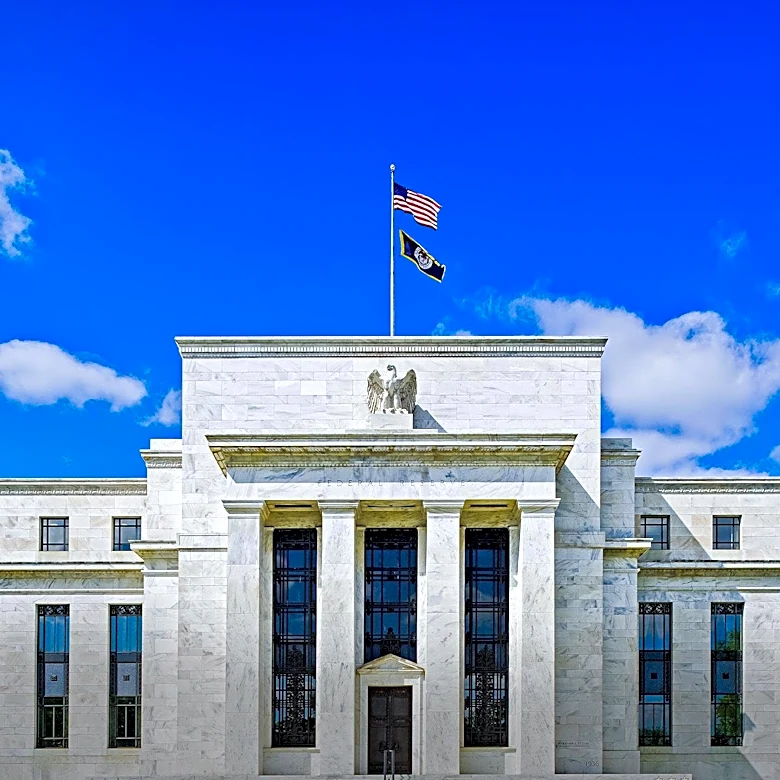
opening price. By 7:01 a.m. ET, prices had further dipped to $3,585.10 per troy ounce, entering the $3,500 range, a level not seen since early September 2025. This sustained decline is primarily attributed to a strong U.S. dollar and increasing expectations of an upcoming interest rate hike by the Federal Reserve. The one-year gain for gold, which was 95.6% on January 29, has now turned into a 10.9% decline over the past year, representing the largest yearly price drop in the daily series.
Why It's Important?
The continued fall in gold prices has significant implications for investors and the broader financial market. Gold is often considered a safe-haven asset, and its decline suggests that investors are shifting away from it, likely due to increased confidence in other investment avenues or the U.S. dollar. A strong dollar typically makes gold more expensive for holders of other currencies, reducing demand. The anticipation of a Federal Reserve rate hike further dampens gold's appeal, as higher interest rates increase the opportunity cost of holding non-yielding assets like gold. This trend could lead to a reallocation of investment portfolios, with funds moving from gold into interest-bearing assets or equities. For investors who rely on gold for portfolio stability and inflation protection, this downturn could result in substantial losses, challenging traditional investment strategies that advocate for a certain percentage of gold allocation.
What's Next?
The trajectory of gold prices will largely depend on the Federal Reserve's upcoming decisions regarding interest rates and the continued strength of the U.S. dollar. If the Fed proceeds with a rate hike as anticipated, gold prices could face further downward pressure. Investors will closely monitor economic indicators and statements from Fed officials for clues on future monetary policy. The current market sentiment suggests a preference for growth-oriented investments over safe-haven assets. Experts offer varying recommendations for gold allocation in portfolios, ranging from 0% to 20%, depending on investment goals and risk tolerance. Some, like Robert R. Johnson, do not advocate for gold investing due to the trade-off with long-term returns, while others, such as Vince Stanzione, recommend a higher allocation for wealth protection against currency devaluation.
Beyond the Headlines
The current decline in gold prices reflects a broader shift in investor psychology and economic outlook. The 'crystallizing expectations' of a Fed rate increase signal a move towards tighter monetary policy, which typically strengthens the dollar and makes alternative investments more attractive. This trend challenges the traditional role of gold as a primary hedge against inflation and economic uncertainty, especially in a period where central banks are actively managing inflation through interest rate adjustments. The debate among financial experts regarding optimal gold allocation highlights the evolving nature of investment strategies in response to changing economic conditions. This period could mark a re-evaluation of gold's utility in modern portfolios, potentially leading to a long-term recalibration of its perceived value relative to other asset classes, particularly for younger investors with longer time horizons.