



What's Happening?
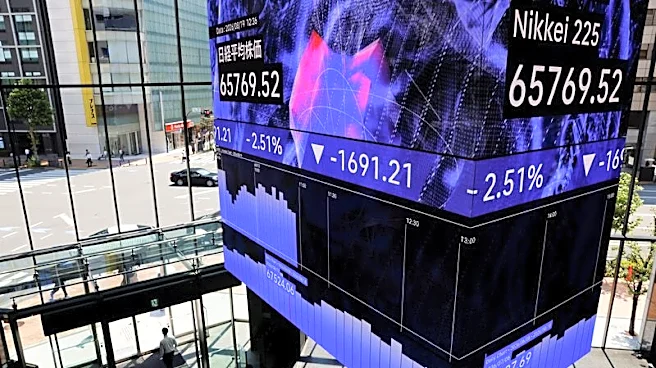
Jim Cramer, host of 'Mad Money,' has stated that a combination of factors, specifically Iran, oil prices, and interest rates, has created a 'punishing market chain.' Cramer suggests that these macroeconomic elements are currently overriding microeconomic
considerations in the market. His analysis highlights the significant influence of global geopolitical events and monetary policy on the overall financial landscape. This perspective underscores the challenges investors face when broader economic and political forces dictate market movements more than individual company performance or sector-specific news. The interplay of these factors is contributing to a difficult environment for market participants, as they navigate uncertainties stemming from international relations and central bank decisions.
Why It's Important?
Cramer's assessment is important because it points to the interconnectedness of global events and their direct impact on U.S. financial markets. Fluctuations in oil prices, often influenced by geopolitical tensions involving countries like Iran, directly affect energy costs for businesses and consumers, potentially leading to inflation or reduced economic activity. Simultaneously, the Federal Reserve's decisions on interest rates, aimed at controlling inflation or stimulating growth, have a profound effect on borrowing costs, corporate investments, and consumer spending. When these powerful forces converge, as Cramer suggests, they can create a challenging environment for investors, making it difficult to predict market behavior based solely on traditional company fundamentals. This situation can lead to increased volatility and uncertainty, impacting retirement accounts, investment portfolios, and the broader economic outlook for the U.S.
What's Next?
The market will likely continue to react to developments concerning Iran's geopolitical standing, global oil supply and demand dynamics, and the Federal Reserve's future interest rate decisions. Investors and analysts will closely monitor statements from central bank officials, energy market reports, and international relations news for any indications of shifts in these areas. Businesses may need to adjust their strategies to account for potentially higher energy costs or changes in borrowing rates. The emphasis on macroeconomic factors suggests that market participants should prepare for continued volatility and a need for agile investment strategies. Any significant changes in these areas could either alleviate or intensify the 'punishing market chain' described by Cramer, influencing market sentiment and economic stability.
Beyond the Headlines
The 'punishing market chain' described by Jim Cramer highlights a deeper trend of increasing global interconnectedness and the vulnerability of financial markets to non-economic factors. Geopolitical events, such as those involving Iran, can quickly translate into economic consequences, demonstrating how international stability is intrinsically linked to domestic economic health. Furthermore, the ongoing debate around interest rates reflects the delicate balance central banks must maintain between controlling inflation and fostering economic growth. This situation also underscores the evolving nature of market analysis, where traditional microeconomic evaluations are increasingly insufficient without a comprehensive understanding of global macro trends. The long-term implications could include a greater emphasis on geopolitical risk assessment in investment strategies and a re-evaluation of how economic models account for external shocks.