




What's Happening?
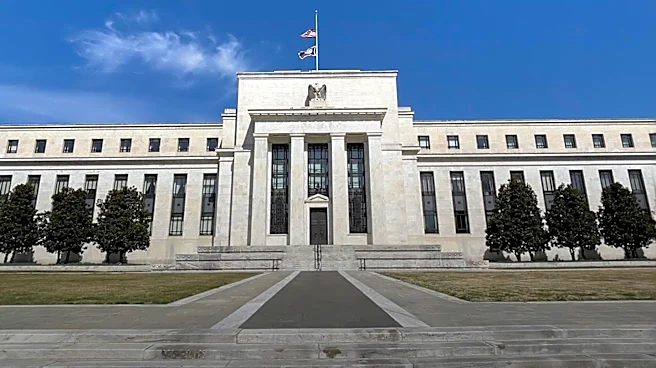
Federal Reserve Bank of Chicago President Austan Goolsbee has stated that the boom in AI data center construction is contributing to "borderline disturbingly high" inflation in the U.S. economy. Goolsbee highlighted that the massive business investment
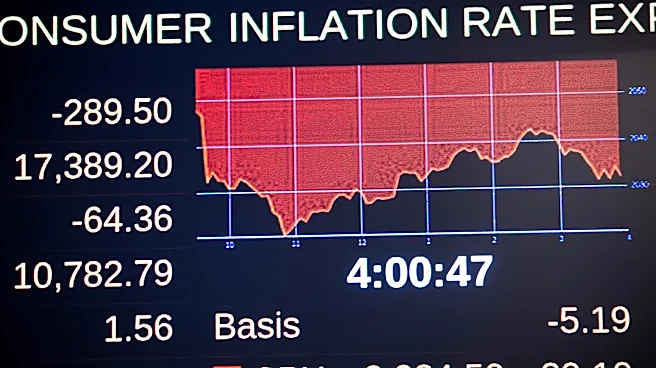
in the AI sector is indirectly leading to rising service prices and has the potential to cause economic overheating. He noted that consumer prices in the U.S. increased by 0.4% in October, exceeding economists' expectations, with increases observed across various goods and services beyond just energy. Goolsbee, who will join the Federal Open Market Committee as a voting member in January, emphasized that current evidence does not indicate a clear path back to the Federal Reserve's 2% annual inflation target. His remarks follow the Fed's October minutes, which showed that most officials anticipate a quarter-point interest rate hike in December.
Why It's Important?
Goolsbee's comments underscore a growing concern among economic policymakers regarding the inflationary pressures stemming from rapid technological advancements. The significant investment in AI infrastructure, while indicative of innovation and growth, is creating demand-side pressures that could complicate the Federal Reserve's efforts to manage inflation. If the AI boom continues to fuel price increases, it could necessitate more aggressive monetary policy tightening, potentially impacting borrowing costs for businesses and consumers. Furthermore, Goolsbee pointed out that while the AI sector is generating substantial wealth, as evidenced by Anthropic's IPO, most Americans are not directly benefiting from this growth. This disparity means many are experiencing higher inflation without seeing the economic upside, contributing to low consumer sentiment despite otherwise strong economic trends.
What's Next?
The Federal Reserve's upcoming meetings will likely focus on how to balance economic growth driven by sectors like AI with the persistent challenge of inflation. Goolsbee's perspective, as a future voting member of the FOMC, suggests a cautious approach to monetary policy, with a strong emphasis on returning inflation to the 2% target. The central bank's decisions on interest rates in December and early next year will be closely watched for signals on how it plans to address these competing forces. Continued monitoring of business investment in AI, consumer price indices, and overall economic sentiment will be crucial for policymakers in determining future actions. The potential for further interest rate hikes remains a significant factor for businesses and consumers alike.
Beyond the Headlines
The discussion around AI's inflationary impact highlights a broader economic challenge: how to integrate rapid technological advancements without destabilizing the broader economy. The AI boom represents a significant shift in industrial investment, potentially leading to structural changes in the economy. While AI promises long-term productivity gains, its immediate capital demands and impact on labor markets could create short-to-medium-term inflationary pressures and wealth distribution challenges. This situation also brings to light the disconnect between high-growth tech sectors and the everyday economic realities of most Americans, raising questions about equitable growth and the potential for widening economic disparities. Policymakers may need to consider not only monetary tools but also fiscal and regulatory measures to ensure that the benefits of technological progress are more broadly shared and that economic stability is maintained.