


What's Happening?
In the third quarter of 2026, clean energy and transportation investment in the United States totaled $59 billion, marking a 3% decrease from the previous quarter and a 22% decline from Q3 2025. This represents the fourth consecutive quarter of year-over-year
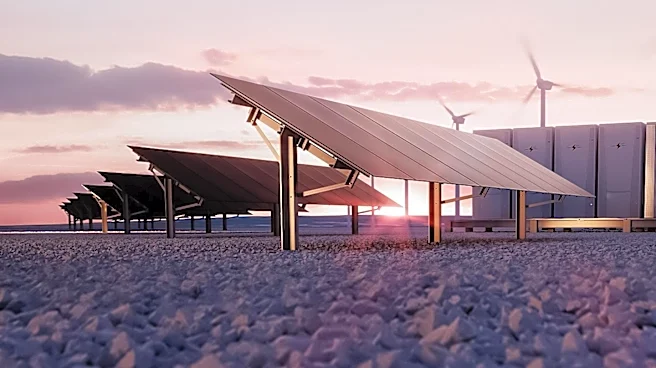
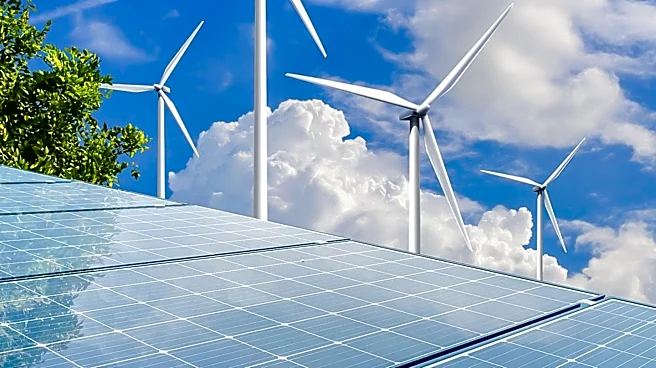
decline in clean investment. A significant federal tax credit deadline for wind and solar projects passed on July 4, 2026, requiring projects that began construction after this date to commence production by December 31, 2027, to qualify for federal tax credits. Retail investment, encompassing consumer spending on zero-emission vehicles (ZEVs), distributed renewable electricity generation, and heat pumps, also saw a decline, totaling $28 billion in Q3 2026, down 3% from the previous quarter and 29% from Q3 2025. ZEV sales, which accounted for 60% of retail investment, fell 42% below Q3 2025 levels, a period that coincided with the expiration of consumer purchase tax credits.
Why It's Important?
The sustained decline in U.S. clean energy and transportation investment, coupled with the volatility in ZEV sales, signals potential challenges for the nation's decarbonization efforts. The federal tax credit deadline for wind and solar projects creates a critical window for developers, potentially leading to a concentrated rush of projects before the end of 2027, followed by a possible slowdown. The significant drop in ZEV sales after the expiration of consumer purchase tax credits highlights the sensitivity of this market to government incentives, indicating that sustained growth may require ongoing policy support or significant cost reductions. This trend could impact manufacturers, investors, and consumers, potentially slowing the adoption of clean technologies and affecting job creation in these sectors. The data suggests a need for stable and predictable policy frameworks to foster consistent investment and market growth in the clean energy transition.
What's Next?
The immediate future will likely see a concentrated effort by wind and solar project developers to meet the December 31, 2027, production deadline to secure federal tax credits. This could temporarily boost activity in the energy and industry segment. However, without new or extended incentives, investment in these areas might face further headwinds post-2027. For the ZEV market, policymakers may consider new or revised incentive programs to stabilize sales and encourage consumer adoption, especially given the sharp decline observed after previous credit expirations. The clean energy sector will be closely watching legislative developments and regulatory guidance to understand the long-term trajectory of federal support. Companies in manufacturing, energy production, and retail will need to adapt their strategies to navigate this evolving investment landscape, potentially focusing on cost efficiencies and market diversification to sustain growth.
Beyond the Headlines
The observed investment trends underscore the complex interplay between policy, market dynamics, and consumer behavior in the clean energy transition. The reliance on tax credits and incentives suggests that the market for certain clean technologies may not yet be fully self-sustaining, raising questions about the long-term viability of rapid decarbonization without consistent government support. The volatility in ZEV sales, in particular, highlights a broader societal challenge: while there is a desire for cleaner transportation, the economic barriers for consumers remain significant. This situation could lead to a re-evaluation of policy approaches, potentially shifting towards more direct subsidies, infrastructure investments, or regulatory mandates to drive adoption. Furthermore, the decline in overall clean investment could have implications for the U.S.'s global competitiveness in green technologies and its ability to meet international climate commitments, necessitating a strategic re-assessment of national clean energy priorities.