







What's Happening?
SES Space & Defense, a subsidiary of SES, has entered into an agreement with Starlab to provide continuous, resilient, low-latency connectivity services for Starlab's commercial space station. This collaboration will utilize SES's O3b mPOWER, a next-generation
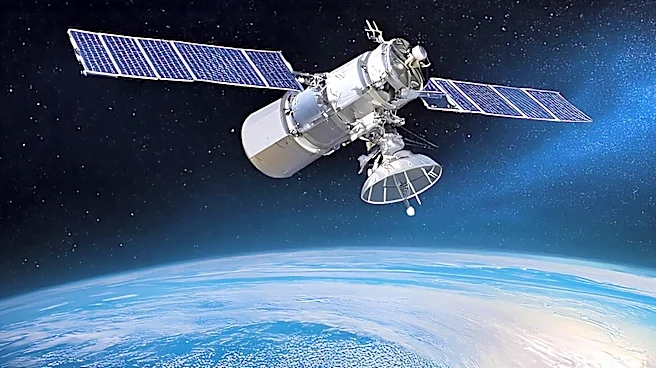
MEO constellation, to support the full lifecycle of the space station through its LEO Relay Services (LRS). The partnership aims to ensure uninterrupted access to data, telemetry, and mission operations, which are crucial for decision-making and mission awareness. Starlab, under NASA's Commercial Low Earth Orbit Development Program, is developing an AI-enabled commercial space station to maintain human presence in low-Earth orbit. The communication system, resulting from a comprehensive engineering collaboration, will be integrated into Starlab's core operations, setting a new benchmark for always-on communications across commercial LEO infrastructure.
Why It's Important?
This partnership is significant as it addresses the critical need for reliable and secure communication infrastructure in space, particularly for commercial research missions and human spaceflight. By integrating SES's LEO Relay Services, Starlab can offer government-grade communications at commercially affordable prices, enhancing the station's operational capabilities. This development is crucial for the seamless transition of microgravity science and research, especially with the impending retirement of the International Space Station. The collaboration also highlights the growing role of private companies in space exploration and the importance of advanced communication technologies in supporting scientific discovery and technological advancement in space.
What's Next?
As the partnership progresses, SES Space & Defense's communication services will be available at Starlab's launch and are expected to expand throughout the station's operational lifecycle. The integrated architecture will provide Starlab customers with a seamless path to scale as additional relay capabilities and next-generation terminals come online. This development could lead to further collaborations and innovations in space communication technologies, potentially influencing future commercial space station projects and enhancing the capabilities of existing space infrastructure.