







What's Happening?
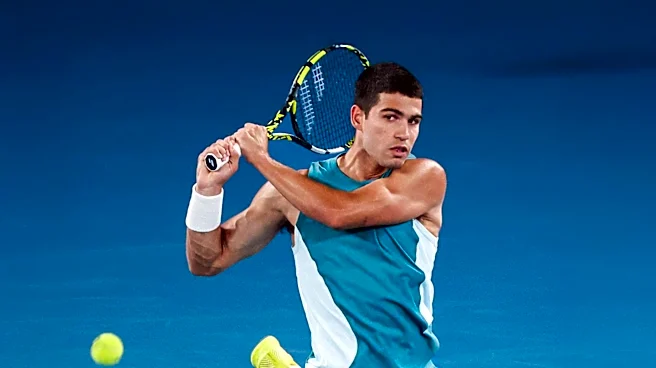
Carlos Alcaraz, the Spanish tennis sensation, is noted for transforming the tennis court into a stage for his performances, creating moments described as 'pure magic.' His dynamic and expressive playing style has garnered attention beyond the traditional
sports realm. Recently, dancer Sherry Tay recreated one of Alcaraz's most spectacular points through the art of dance, highlighting the artistic and fluid nature of his movements on the court. This unique interpretation underscores how Alcaraz's tennis transcends mere athleticism, blending skill with an almost choreographic quality that resonates with other art forms. The event, titled 'Carlos Alcaraz: When Tennis Meets Dancing,' emphasizes the aesthetic appeal and entertainment value he brings to the sport, drawing parallels between his on-court actions and the expressive movements of dance.
Why It's Important?
This event is important because it broadens the appeal of tennis, attracting audiences who might not typically follow the sport. By framing Alcaraz's play as a form of dance, it highlights the artistry and athleticism involved, potentially drawing in new fans from the arts and entertainment sectors. This cross-disciplinary appreciation can elevate the cultural status of tennis, moving it beyond a purely competitive sport to a form of performance art. For Alcaraz, it reinforces his image as a charismatic and captivating player, enhancing his marketability and global recognition. This kind of creative interpretation can also inspire other athletes to consider the artistic dimensions of their own sports, fostering a more holistic view of athletic performance that values both technical skill and aesthetic expression. It also demonstrates innovative ways to engage with sports content, offering a fresh perspective on how athletic achievements can be celebrated and understood.
What's Next?
The success of initiatives like 'Carlos Alcaraz: When Tennis Meets Dancing' could pave the way for more collaborations between sports and other artistic disciplines. We might see similar projects where athletes' movements are interpreted through dance, music, or visual arts, further blurring the lines between sports and entertainment. This could lead to new forms of content creation and fan engagement, potentially influencing how sports broadcasts and promotional materials are developed. For Alcaraz, continued recognition of his artistic playing style could lead to endorsements and partnerships that leverage his unique appeal, extending his influence beyond traditional tennis sponsorships. Other athletes might also be inspired to explore the artistic aspects of their own performances, leading to a broader trend of integrating art and sport.
Beyond the Headlines
The deeper implication of this event lies in its potential to redefine how athletic prowess is perceived and valued. By connecting tennis with dance, it challenges the conventional view of sports as solely about competition and physical strength, emphasizing instead the grace, precision, and expressive power inherent in high-level athletic performance. This shift in perception can foster a greater appreciation for the aesthetic qualities of sports, encouraging a more nuanced understanding of what makes an athlete truly exceptional. It also highlights the universal language of movement and how it can transcend cultural and disciplinary boundaries, creating shared experiences and fostering connections between seemingly disparate fields like sports and dance. This could lead to a richer cultural dialogue about the nature of human achievement and expression.