




What's Happening?
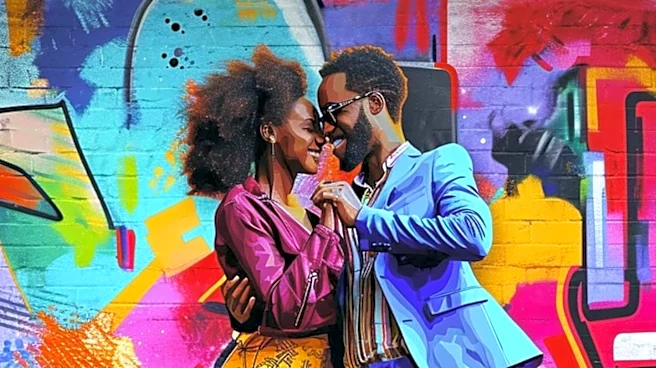
Actor and activist Kendrick Sampson has sparked a widespread discussion with his 'wide love' philosophy, introduced during an episode of Shan Boodram’s 'LOVERS' podcast. Sampson expressed a preference for having children with a 'homegirl' rather than
a romantic partner, stating that traditional romantic love is the 'smallest' and 'most narrow' form of love. He believes that deeper connections, care, and mutual growth do not necessarily require intimacy or romance. While acknowledging he could engage in marriage or monogamy, Sampson indicated he would rather direct his effort elsewhere, prioritizing a broader search for love over conventional relationships. This perspective has led to significant debate online regarding romance, responsibility, parenting, and the evolving definition of the Black family.
Why It's Important?
Sampson's 'wide love' philosophy is important because it challenges traditional notions of family and romantic relationships, particularly within the context of the Black community. The debate highlights varying perspectives on what constitutes a healthy and functional family unit, and how love and responsibility are defined outside of conventional romantic partnerships. For some, Sampson's views resonate with a desire for liberation from societal expectations, while for others, they raise concerns about the potential for men to avoid responsibility in co-parenting scenarios. The discussion also touches upon the unique challenges faced by Black women, including the maternal health crisis and economic disparities, which add layers of complexity to conversations about relationship structures and support systems. This dialogue contributes to a broader cultural re-evaluation of personal relationships and family dynamics in contemporary society.
What's Next?
The conversation initiated by Kendrick Sampson's 'wide love' philosophy is likely to continue evolving across social media platforms and cultural discussions. As more individuals weigh in, there may be further exploration of alternative family structures and relationship models. This could lead to increased visibility for diverse family arrangements and a deeper examination of the societal pressures surrounding marriage and traditional parenting. The debate may also prompt more public figures and thought leaders to share their perspectives on these topics, potentially influencing how younger generations approach relationships and family planning. The ongoing dialogue could contribute to a more nuanced understanding of love, commitment, and responsibility in modern relationships.
Beyond the Headlines
Beyond the immediate reactions, Sampson's philosophy delves into deeper ethical and cultural dimensions concerning individual autonomy versus communal responsibility. It prompts a re-examination of how societal norms, particularly those surrounding romantic love and the nuclear family, might inadvertently limit personal fulfillment or create undue pressure. The discussion also implicitly touches on the historical context of Black family structures, which have often adapted to challenging circumstances, leading to diverse forms of kinship and support. The concept of 'wide love' could be seen as an attempt to deconstruct patriarchal expectations within relationships, though critics argue it might inadvertently perpetuate them. Ultimately, this conversation encourages a critical look at the values we place on different forms of love and partnership, and how these values shape our understanding of family and community.