





What's Happening?
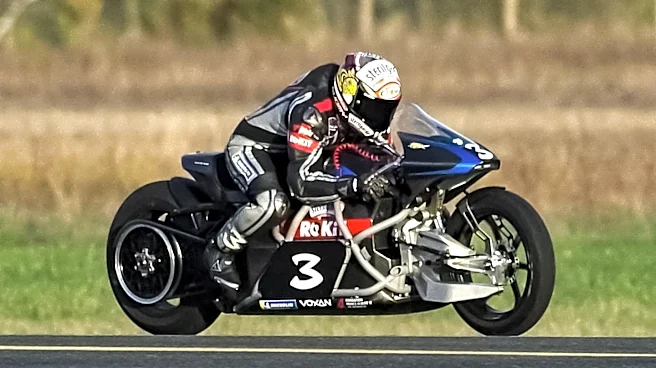
Californian electric motorcycle manufacturer Zero has established a new Guinness World Record for the longest distance traveled on a single charge by an electric motorcycle. A factory-standard Zero DS adventure bike, equipped with a 19.2 kWh battery setup
including a Power Tank, covered 271.23 miles (436.5 kilometers). This feat surpasses the previous record of 193 miles set by Verge Motorcycles’ TS Pro in 2025 by over 40%. The record attempt took place on quieter A and B roads in France, starting in the French Alps and descending towards the Mediterranean coast. This mountainous terrain allowed the riders to maximize the use of regenerative braking, contributing significantly to the extended range. The riders also deliberately chose to travel at night to minimize traffic and maintain an efficient speed of approximately 32 mph. Two other Zero models, the SRS and DSR/X, also participated, achieving 217 miles and 239 miles respectively.
Why It's Important?
This new world record by Zero Motorcycles is significant for the U.S. electric vehicle industry, particularly in the motorcycle segment, as it directly addresses 'range anxiety'—a major concern for prospective electric motorcycle riders. By demonstrating a real-world range exceeding 270 miles, Zero aims to showcase the practical capabilities of electric motorcycles and attract a broader customer base. This achievement could accelerate the adoption of electric motorcycles by alleviating concerns about limited travel distances, thereby contributing to the growth of the electric vehicle market and reducing reliance on fossil fuels. The innovative use of regenerative braking in mountainous terrain highlights the potential for energy recovery in varied environments, which could influence future electric vehicle design and infrastructure development. For consumers, it signals advancements in battery technology and efficiency, promising more viable and convenient electric transportation options. This record also intensifies competition within the electric motorcycle sector, potentially driving further innovation in battery density, motor efficiency, and overall vehicle performance.
What's Next?
While the record-breaking achievement demonstrates the potential of electric motorcycles, the conditions under which it was set—utilizing mountainous terrain for regenerative braking and maintaining a low, efficient speed at night—may not be representative of typical daily commutes. Future developments will likely focus on translating these extended ranges to more diverse riding conditions and higher average speeds. The industry will continue to pursue improvements in battery and motor efficiency, with solid-state batteries on the horizon promising even greater power density and range. Zero Motorcycles and its competitors will likely leverage this record in their marketing efforts to attract new customers and expand their market share. Additionally, this achievement could spur further research and development into optimizing electric motorcycle performance for various terrains and rider behaviors. The ongoing evolution of charging infrastructure will also be crucial in supporting the increased adoption of electric motorcycles with longer ranges.
Beyond the Headlines
The Zero electric motorcycle's record-breaking journey subtly highlights the interplay between technology, environment, and human behavior in achieving optimal performance for electric vehicles. The strategic choice of a downhill route in the French Alps for maximizing regenerative braking underscores that 'range' is not solely a function of battery capacity but also of intelligent design and environmental factors. This could lead to a greater emphasis on route planning and 'smart' navigation systems in electric vehicles that optimize energy consumption based on topography. Furthermore, the deliberate decision to ride at night at a consistent, efficient speed points to the potential for 'eco-driving' practices to significantly extend electric vehicle range, encouraging a shift in driver habits. This record, therefore, is not just about a technological milestone but also about demonstrating how a holistic approach—combining advanced engineering with mindful operation and environmental awareness—can push the boundaries of electric mobility, fostering a more sustainable and efficient transportation ecosystem.