




What's Happening?
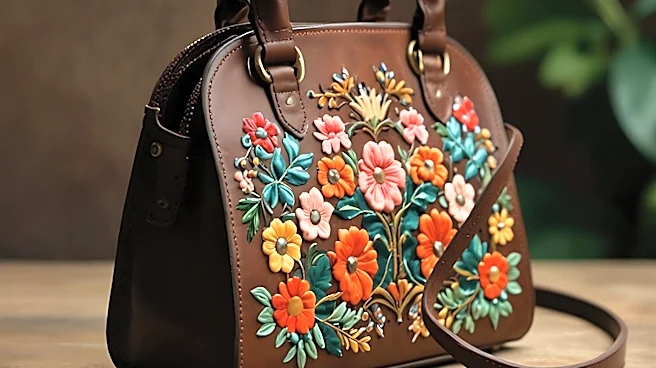
A new fashion trend, dubbed 'grandmacore,' is gaining prominence in the luxury bag market, characterized by the extensive use of needlepoint, embroidery, and tapestry. This trend, which emphasizes tactile and cozy aesthetics, was notably kicked off by Valentino's
DeVain bag in its Pre-Fall 2026 collection, featuring beaded details and tapestry textiles. Other designers are also embracing this style; Dries Van Noten's Fall/Winter 2026 collection includes a floral tapestry duffel-style tote, and Fendi has reissued archival versions of its Baguette bag with intricate craft elements like zebra-striped beadwork, mirror appliqué, and floral embroidery. These designs often involve significant handwork, such as Fendi's mirror bag requiring 138 hours of labor from a Mumbai atelier.
Why It's Important?
This 'grandmacore' trend signifies a shift in luxury fashion towards more tactile, artisanal, and comfort-oriented accessories. For the U.S. market, it suggests a consumer desire for items that evoke nostalgia, craftsmanship, and a sense of heritage, moving away from purely minimalist or overtly modern designs. This trend could influence retail buying strategies, leading stores to stock more bags with intricate textures and handcrafted details. It also highlights the global nature of fashion production, with luxury brands collaborating with international artisans, as seen with Fendi's work with a Mumbai atelier. The emphasis on handwork could also create opportunities for skilled artisans and craft-focused businesses, both domestically and internationally, to contribute to high-end fashion.
What's Next?
The 'grandmacore' aesthetic is expected to continue influencing bag designs and potentially extend to other accessory categories and apparel. Consumers will likely see more options featuring embroidery, tapestry, and other handcrafted elements in upcoming collections from various brands. Fashion publications and influencers will continue to highlight these styles, further solidifying their presence in the market. Retailers will monitor consumer response to these tactile bags, which could lead to increased investment in collections that prioritize unique textures and artisanal techniques. The trend's alignment with winter and holiday dressing suggests its continued relevance in seasonal fashion offerings.
Beyond the Headlines
The rise of 'grandmacore' bags can be seen as a reaction to an increasingly digital world, offering consumers a sense of 'tactile, touchable joy.' These bags, reminiscent of cherished heirlooms or cozy home textiles, provide a connection to tradition and a slower pace of life. This trend also underscores the value of human touch and craftsmanship in an era dominated by technology and mass production. Ethically, it could promote a greater appreciation for the labor and skill involved in creating fashion items, potentially encouraging more sustainable consumption habits by valuing longevity and artistry over disposability. Culturally, it taps into a collective nostalgia for comfort, warmth, and the familiar, reflecting broader societal desires for authenticity and connection.